
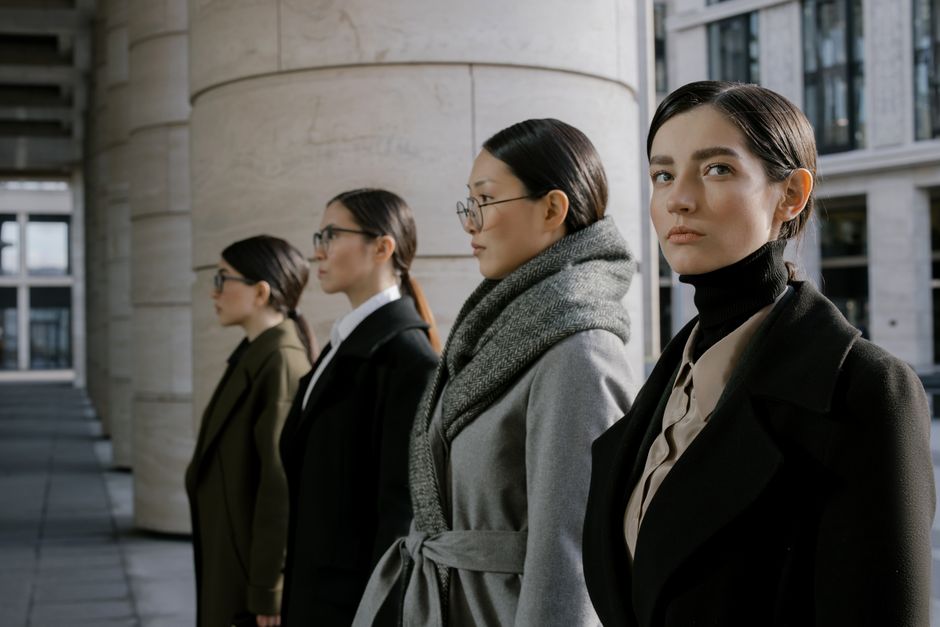
Picture this: It’s 8:15 a.m. You have a first-round interview at a financial services firm at 10. You’ve researched the company, rehearsed your answers, printed your resume. Then you open your closet and freeze.
The blazer that fit six months ago now pulls across the shoulders. The trousers work, but only with heels you can barely walk in. The blouse is probably fine — unless it reads too casual for a firm that posts LinkedIn photos of employees in full suits.
This is the actual interview attire problem. Not “what looks professional.” What does this specific employer’s culture read as professional — and how do you signal you already understand that before you say a word.
Reading the Room Before You Walk In
The biggest mistake candidates make is dressing for some abstract idea of “professional” rather than the specific firm. A look that lands perfectly at McKinsey reads as stiff at a UX agency. What signals credibility at a law firm reads as trying too hard at a tech startup.
| Industry | Expected Level | Safe Outfit Formula | Brand Starting Points |
|---|---|---|---|
| Finance / Banking | Business formal | Tailored suit or blazer + dress trousers | Theory, Lafayette 148, Banana Republic |
| Law | Business formal | Structured blazer + pencil skirt or trousers | J.Crew Collection, Ann Taylor |
| Management Consulting | Business formal-to-smart | Blazer + well-fitted trousers, subtle accessories | MM.LaFleur, Banana Republic |
| Tech (large company) | Smart casual | Blazer + clean jeans OR tailored trousers | Everlane, Quince, Uniqlo |
| Tech (startup) | Business casual | Neat top + tailored trousers or dark jeans | Everlane, Madewell, COS |
| Creative / Marketing | Business casual with personality | Structured outfit + one statement piece | & Other Stories, Reformation |
| Healthcare | Smart casual | Neat blouse + slacks, avoid loud patterns | Ann Taylor, Talbots |
| Education | Business casual | Layered, conservative, comfortable | J.Crew, Talbots |
This table is not built on aesthetics. It reflects what hiring managers in each field have cited as appearance-related reasons for passing on candidates. “Overdressed” shows up in tech rejection notes. “Underprepared looking” appears in finance and law callback records.
How to confirm the dress code without asking directly
LinkedIn is the most reliable intelligence tool here. Search the company, filter by employees, and look at profile photos from company events — not personal shots. What people wear to internal events shows the upper end of casual the culture actually tolerates.
Glassdoor interview reviews are the second check. Candidates frequently mention what they wore and whether it matched the room. Three or four data points from the same company is usually enough to calibrate.
When in doubt, go one level up — not two
One step above standard signals seriousness. Two steps signals you’ve misread the culture entirely. A blazer over clean trousers is the safe middle zone that survives contact with every row in the table above.
Bottom line: If public information doesn’t clarify the dress code, a navy blazer with tailored dark trousers is the fallback that works across every industry listed here.
The Four Pieces That Determine the First Impression
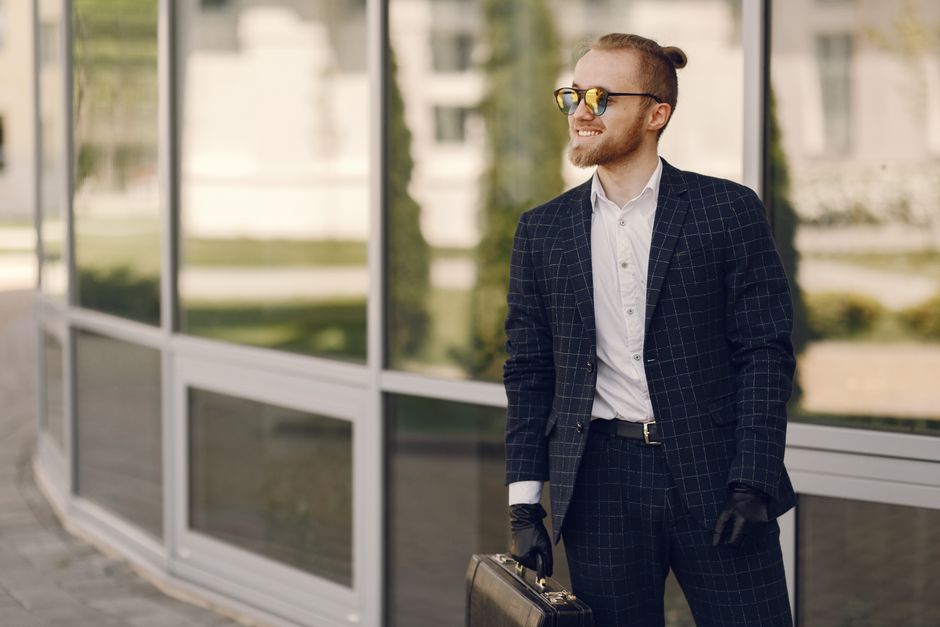
The blazer is the highest-leverage item in an interview outfit. It structures your silhouette, signals preparation, and is the piece interviewers most consistently notice. For a reliable entry-level pick, the MM.LaFleur Remy Blazer ($198) in black or charcoal holds its shape across repeated wear. The Theory Admiral Crepe Blazer ($495) is the investment version — it looks identical at the end of a four-hour interview day as it did when you put it on. Budget option: the Quince Italian Stretch Knit Blazer ($60) photographs well but wrinkles faster under stress.
For trousers, fit determines everything. The Banana Republic Sloan Straight-Leg Pant ($98–$120) comes in 30, 32, and 34 inseam lengths, which cuts alteration costs. The MM.LaFleur Remy Pant ($88) runs consistently true to size for petite frames.
Shoes are where candidates consistently make the wrong tradeoff. High heels signal formality but create discomfort that shows up in body language across a long interview. The Cole Haan Grand Ambition Pump ($160) uses GRAND.ØS cushioning that makes a 2.5-inch heel genuinely wearable for three hours straight. The Vince Camuto Elvin Ankle-Strap Sandal ($89) works for warmer months and creative-adjacent industries where full formality isn’t expected.
Bag: keep it structured. The Cuyana Classic Zip Tote ($195) is the clean benchmark. The Quince Italian Leather Tote ($100) is functionally close enough for most interview contexts and photographs identically under fluorescent lighting.
The detail most guides skip: hem length
Knee-length skirts are universally safe. Above the knee by more than two inches draws attention that can distract interviewers in formal settings. Midi lengths work in conservative industries but read as dated in tech and creative roles — a genuine tradeoff worth knowing before you choose.
Color strategy without overthinking it
Navy, charcoal, black, and dark burgundy are safe across nearly every industry in 2026. Avoid white blouses under blazers unless you’ve confirmed the room’s lighting won’t cause transparency issues. One pattern per outfit is fine. Two is one too many.
Bottom line: Spend the most on the blazer, then trousers, then shoes. The bag matters least of the four.
What Is Actually Costing You the Callback
Fit problems end more candidacies than outfit choices do. A $600 blazer with shoulder seams that sit an inch too wide reads worse than a $60 blazer that fits cleanly. The most common fit failures: shoulder seams set too far out, trousers that gap at the waist, blouses that pull across the chest. All are fixable for $15–$40 at a local tailor. Most candidates don’t bother. The second most common mistake: wearing shoes that haven’t been on your feet in six months. Shoes that don’t fit the way you remembered will affect how you walk, sit, and hold your posture for the full duration of the interview — and interviewers read discomfort as nervousness.
Remote Interviews Require a Different Calculation Entirely
In-person attire creates a full-body impression. Remote interviews compress everything into a cropped rectangle — roughly from your chest to two inches above your head. That changes what matters and what you can safely ignore.
The camera does not see your trousers, your shoes, or your bag. What it does capture with surprising accuracy: fabric texture against your skin tone, the contrast between your outfit and background, and whether you are front-lit or silhouetted from behind by a window.
These specifics matter more in a remote interview than any single clothing recommendation:
- Avoid white and bright red. White overexposes under standard webcam settings and creates a blown-out glow around your face. Red causes color bleeding on compressed video streams — a known artifact of common webcam codecs.
- Navy, dusty blue, soft teal, and warm burgundy all read cleanly on camera across a range of skin tones and lighting conditions.
- Wear a structured blazer regardless of the setting. From a home office or kitchen table, a blazer signals deliberate effort specific to this meeting. It reads differently than a blouse alone — and that difference registers with interviewers even on a small screen.
- Your background directly affects how your outfit reads. A cluttered background makes even a sharp outfit look careless. A plain wall or organized shelf behind you makes a simple blazer look intentional.
What to test the night before
Run a full camera check at the same time of day as your interview. Lighting changes significantly by hour. A window that provides flattering natural light at noon can silhouette you completely at 9 a.m. Camera at eye level. Not below — low angles create a visual imbalance that works against you before you’ve said anything.
The one rule that sounds obvious but gets ignored
Wear real trousers or a skirt anyway. If you need to stand, step away from the desk, or handle something unexpected during the call, being half-dressed on camera is a situation that is genuinely hard to recover from. It happens more often than candidates expect.
These observations are based on hiring patterns and publicly available recruiter feedback. Individual company cultures vary, and no outfit guarantees a callback.
Specific Questions That Deserve Direct Answers
Does a full suit still make sense in 2026?
For law, finance, and management consulting first rounds: yes. The full suit still signals the right things in those cultures and skipping it is a gamble that rarely pays off at the interview stage. For everything else, a blazer-and-trousers combination reads as equally serious without the rigidity. The Ann Taylor Marisa Suit ($160 for the set on sale) and the J.Crew Collection Blazer (from $248 for the jacket alone) are two entry points worth knowing if you’re buying specifically for interview purposes.
Is it ever acceptable to wear dark jeans to an interview?
Only when the recruiter or job posting explicitly mentions casual dress, or when LinkedIn evidence confirms jeans appear in client-facing contexts at that company. Dark indigo jeans with a structured blazer and clean leather shoes work in tech and creative industries. Distressed or faded denim at any interview is a mistake, regardless of industry or role level.
What about interviewing for a role where the day-to-day is visibly casual?
Dress at the top end of that culture’s range for the interview — not the average. If the actual job involves jeans daily, wear a blazer-and-trousers version of that culture to the first meeting. You can dress to the average once you’ve been hired. Interviewers at casual companies still notice who took the interview seriously enough to dress up slightly for it.
The single most important thing your outfit does in an interview is demonstrate that you researched the culture before you arrived.