

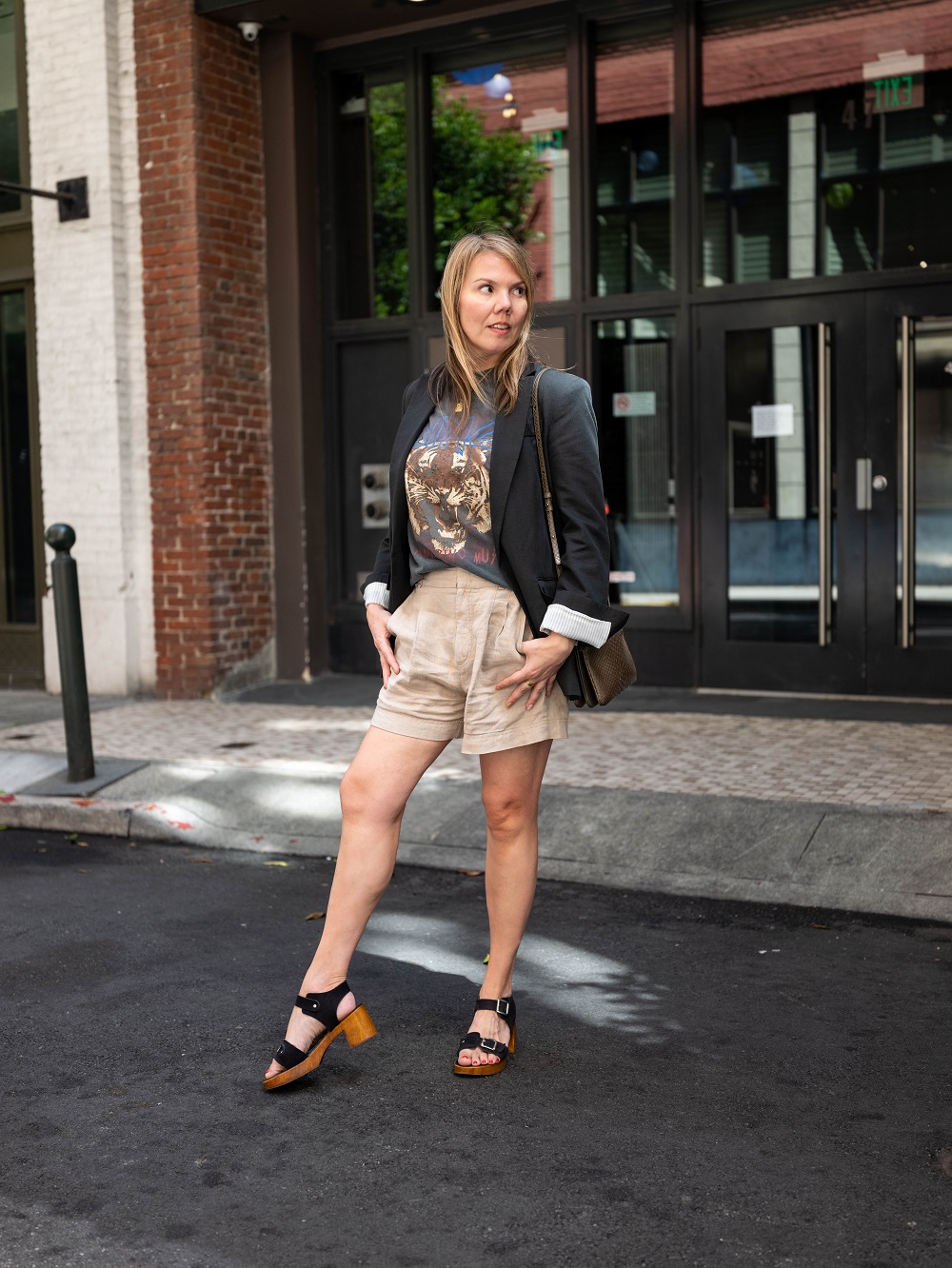
You step out of your hotel on a sunny Tuesday afternoon in October. By the time you walk two blocks toward Market Street, the fog has rolled over Twin Peaks and the temperature dropped 12 degrees. Your cotton sweater feels damp. The wind cuts through your jeans. You are cold, you are uncomfortable, and you have six more hours of sightseeing ahead.
This is not bad luck. This is San Francisco fall. The city has microclimates that shift block by block, and the weather forecast is often wrong by 10°F or more. The solution is not a single heavy coat. It is a deliberate, three-layer system that you can add or remove in under 30 seconds.
The First Rule: Cotton Is a Liability
Cotton absorbs moisture — from fog, from drizzle, from your own body heat — and holds it against your skin. When the temperature drops, that moisture accelerates heat loss. A cotton t-shirt under a hoodie in San Francisco fall is a gamble you will lose by 4 PM.
The alternative is a merino wool base layer. Merino handles moisture differently. It pulls sweat away from your skin and releases it into the air. It also resists odor for multiple wears, which matters when you are packing light for a weekend trip.
Two specific options cover most needs:
- Icebreaker Merino 150 Zone Long Sleeve Crewe ($80). Weighs 150 grams per square meter — light enough for a 68°F afternoon, warm enough for a 50°F morning. The “Zone” panels have different knit densities for ventilation where you need it.
- Uniqlo Merino Crew Neck Sweater ($40). Less technical, but works for a base or mid layer. The 100% merino version (not the blend) performs noticeably better. Check the tag before buying.
For men and women, the principle is the same: a thin merino layer against your skin replaces your cotton t-shirt or blouse. You will not overheat at noon, and you will not freeze at dusk.
What About Synthetic Base Layers?
Polyester and nylon blends (like Patagonia Capilene or REI Co-op Midweight) also wick moisture and dry faster than cotton. They cost less than merino — typically $30 to $55. The tradeoff is odor control. After one day of wear, synthetics start to smell. Merino lasts three to four days without washing. For a three-day trip, that difference matters. For a single day of hiking, synthetics are fine.
The Mid Layer: Insulation That Packs Small
The mid layer provides warmth. In San Francisco fall, you do not need a heavy parka. You need something that traps heat without bulk, because you will take it off and put it back on multiple times per day.
The most practical option is a synthetic puffy jacket or a lightweight down jacket. Both compress to the size of a water bottle and weigh under 12 ounces.
Here is how the two compare for this specific use case:
| Jacket | Fill / Insulation | Weight | Price | Best For |
|---|---|---|---|---|
| Uniqlo Ultra Light Down (men’s / women’s) | 90% down, 10% feather, 750 fill power | 8.5 oz | $80 | Dry days, mostly sunny, no rain expected |
| Patagonia Nano Puff Hoody | 60g PrimaLoft Gold Eco synthetic | 11.8 oz | $279 | Foggy or misty days, damp conditions |
| Everlane The ReNew Anorak | 100% recycled polyester fill | 14 oz | $98 | Casual city wear, budget pick, wind resistance |
Down loses its insulating power when wet. If you are walking through the Mission District in light fog, down is fine. If you are at Lands End in heavy mist, synthetic insulation (like the Nano Puff) retains warmth even damp. That is the single most important distinction for San Francisco fall.
When a Fleece Works Better
A fleece jacket (like the Patagonia Better Sweater or the REI Co-op Trailmade) is cheaper and more breathable than a puffy. It also absorbs moisture rather than repelling it. On a dry, cold morning, a fleece is comfortable. On a foggy afternoon, it becomes damp and heavy. Fleece is a fine choice if you are staying indoors or in the sun. For the typical fall day with fog rolling in by 3 PM, a puffy jacket outperforms fleece.
The Outer Shell: Wind and Drizzle Protection
San Francisco fall does not produce heavy rain. October averages 0.8 inches of rain total. November averages 2.5 inches. But the fog carries moisture, and the wind off the Pacific Ocean is constant at 10 to 20 mph.
You do not need a waterproof rain jacket. You need a windproof shell that can handle light mist. The shell goes over your mid layer and comes off when you enter a restaurant or museum.
Two styles dominate here:
- Uniqlo Blocktech Parka ($70). Lightweight, fully windproof, DWR (durable water repellent) coating handles light drizzle. Packs into its own pocket. The hood is essential — San Francisco wind will find your ears.
- Outdoor Research Ferrosi Hoody ($129). More breathable than the Blocktech. Uses a woven nylon/spandex fabric that blocks wind but vents heat. Better for active use — walking up hills, hiking the Presidio. Not fully waterproof, but for San Francisco fall, that rarely matters.
If you own a technical rain jacket like the Arc’teryx Beta LT or the Patagonia Torrentshell, those work fine. They are overkill for the weather but will keep you dry. The downside is bulk and noise — crinkly Gore-Tex in a nice restaurant draws looks.
Bottoms and Footwear: The Most Common Mistakes
Visitors make two consistent errors with their lower half in San Francisco fall. First, they wear jeans without considering the wind. Second, they wear sneakers that cannot handle a wet sidewalk.
Pants: Wind Resistance Matters More Than Warmth
Standard denim (12 to 14 oz cotton) lets wind pass through. On a 55°F afternoon with 15 mph wind, your legs will feel cold within 20 minutes. The fix is not thermal long underwear. It is a pair of pants with a tighter weave or a windproof lining.
- Outdoor Voices Warmup Pant ($95). French terry with a brushed interior. Blocks wind better than jeans, stretches for walking, and looks clean enough for dinner.
- Uniqlo Smart Ankle Pants with Stretch ($50). Wool-blend fabric with a nylon core. Professional enough for business meetings, warm enough for a cold walk. These are the most versatile fall pant under $100.
- Lululemon Commission Pant Warpstreme ($128). The fabric is a woven nylon/Lycra blend that blocks wind completely. Wrinkle-resistant. Expensive, but they replace both dress pants and casual pants in a single bag.
If you wear jeans, choose a pair with some elastane (1-2%) for stretch and pair them with a merino base layer top. Your legs will still be cold, but your core will be warm.
Footwear: Wet Pavement Is the Real Problem
San Francisco sidewalks collect puddles. The gutters are grimy. Your white canvas sneakers will be ruined by day two.
Two shoe categories work for fall in SF:
Waterproof leather boots. The Blundstone 585 ($210) is the default choice for locals. It is a pull-on Chelsea boot with a rubber sole and waterproof leather. It handles puddles, looks right with jeans or chinos, and does not need breaking in. The Danner Mountain 600 ($210) is a better choice for hiking — Vibram sole, Gore-Tex liner, more ankle support.
Wool sneakers. Allbirds Wool Runners ($110) are not waterproof. They are water-resistant. In light drizzle, the merino upper repels moisture for about 30 minutes before it soaks through. For a day of walking with occasional fog, they work. For a rainy day, they do not. The Allbirds Wool Dasher Mizzles ($150) has a Puddle Guard treatment and a rubber outsole — that version handles wet conditions properly.
A third option: Vans MTE-1 Sk8-Hi ($100). These are canvas sneakers with a fleece lining and a rubber lug sole. They look like regular Vans but handle cold and damp better. Not waterproof, but warmer than standard Vans.
Accessories That Save the Day
Three accessories make the difference between enjoying your trip and being miserable.
A thin beanie. Carhartt Acrylic Watch Hat ($18) or Patagonia Brodeo Beanie ($35). San Francisco wind hits your ears and forehead first. A beanie that fits under your hood adds 5°F of warmth without bulk.
A scarf. A cotton or wool scarf seals the gap between your jacket collar and your neck. The Uniqlo Cashmere Blend Scarf ($40) is soft, warm, and packs flat. A scarf also doubles as a makeshift blanket on the BART or a plane.
Gloves. Not heavy ski gloves. Thin merino liners like the Smartwool Liner Glove ($30) or the Outdoor Research Flurry Sensor Glove ($35). These allow you to use your phone without removing them. Your fingers will be cold without gloves from October through April.
Do not bring an umbrella. The wind in San Francisco will snap it within two blocks. A hooded shell is the only reliable rain protection.
When This System Fails — and What to Do Instead
This three-layer system (base + mid + shell) works for 90% of fall days in San Francisco. The 10% where it fails are the rare heavy rain days (typically late November) and the warm afternoons when the temperature hits 75°F or higher.
On a warm November afternoon, you will not need the mid layer. Wear the merino base under a light shell or a windbreaker. If the forecast shows 75°F, swap the merino for a synthetic t-shirt (Patagonia Capilene Cool Daily) and carry the shell in your bag.
On a heavy rain day (sustained downpour, not drizzle), the shell needs to be fully waterproof. The Uniqlo Blocktech handles light rain but will wet out after 30 minutes in a real storm. In that case, wear a Gore-Tex jacket or a fully rubberized raincoat like the Rains Long Jacket ($155). Skip the down mid layer and use synthetic insulation only.
One more failure mode: if you run hot. Some people generate enough body heat that the merino base + puffy + shell is too warm even at 55°F. For those people, drop the mid layer entirely. Wear the merino base under a shell or a fleece vest. The Patagonia Nano Puff Vest ($199) keeps your core warm while letting your arms breathe.
The system is not rigid. It is a starting point. Adjust based on your own metabolism and the specific microclimate of the neighborhood you are in. The Marina is warmer than the Sunset. Nob Hill is windier than the Mission. Check the fog forecast at fog.today before you leave your hotel.
One sentence summary: a merino wool base layer, a compressible puffy jacket, and a windproof shell — worn in combination or alone — will handle every weather condition San Francisco throws at you in fall.