


A blouse that looks sharp in a mirror can fall apart under a webcam. The wrong collar reads as sloppy, a shiny fabric turns into a glare, and a print that photographs well in person can moiré on screen. You are not buying a blouse for the office right now. You are buying one for a 720p lens, a ring light, and a 30-minute call. That changes the rules.
This is not legal advice about workplace dress codes. But courts and HR departments have generally recognized that employers can set appearance standards for client-facing roles, including remote ones. A blouse that distracts on camera can, in most states, be treated as a performance issue. The practical fix is simpler: choose fabrics and structures that hold up under compression and flat lighting.
Why Most Blouses Fail on a Webcam
The camera does not see what your eye sees. It flattens depth, exaggerates contrast, and compresses texture. A blouse that looks tailored in person can look like a wrinkled sack on a laptop sensor. This is the first principles problem: video calls remove the visual information that makes fabric look expensive. You have to replace that lost information with deliberate choices.
Three things destroy a blouse on camera. First, shine. Satin, silk charmeuse, and any fabric with a glossy finish reflects the ring light back into the lens. The result is a bright patch on your chest or shoulders that pulls attention from your face. Second, low contrast structure. If the collar, placket, and shoulders all blend into one tone, the camera cannot find the edges of the garment. You look like a floating head. Third, busy prints. Small geometric patterns create a shimmering moiré effect on digital sensors. Polka dots under half an inch, fine stripes, and tight plaids are the worst offenders.
The fix is not to buy more expensive blouses. It is to buy blouses engineered for the medium. Matte fabrics, visible structure, and solid or large-scale prints solve most of the problem before you log on.
Fabric Choices That Read Well at 720p
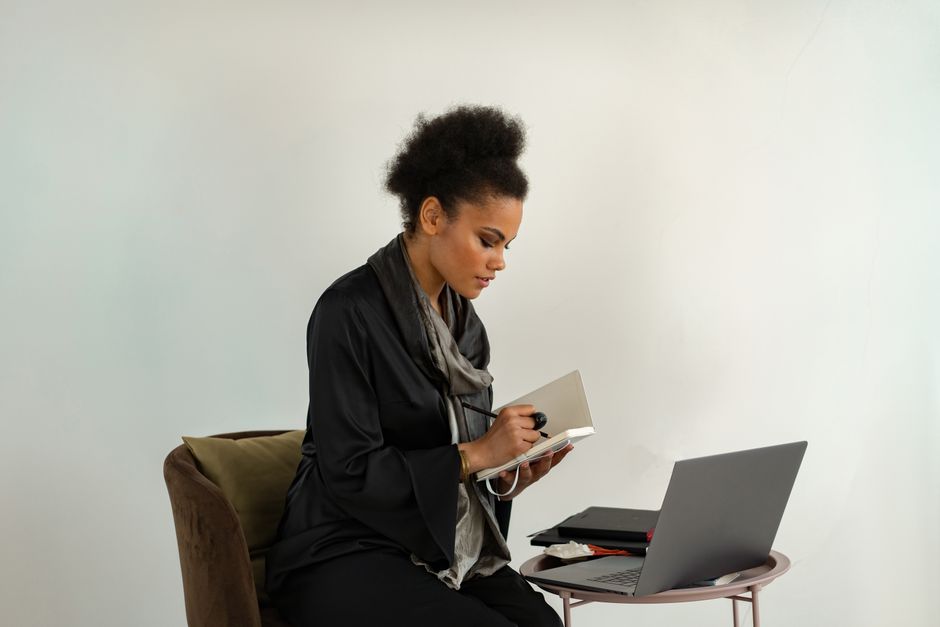
Cotton poplin, matte crepe, and ponte knit are the three safest fabrics for a virtual meeting. They absorb light instead of reflecting it, they hold a crease without looking stiff, and they do not produce moiré. A Brooks Brothers Non-Iron Cotton Poplin Blouse ($98) is a reliable baseline. The poplin has a slight texture that gives the camera something to focus on without glare.
For a softer drape that still reads as professional, the Theory Perfect Crepe Blouse ($225) is a strong pick. The crepe has a matte finish and a weight that hangs cleanly even when you sit slightly hunched toward the screen. Avoid silk charmeuse for video calls unless you test it first with your exact lighting setup.
One failure mode worth naming: jersey knit blouses. They are comfortable, but they wrinkle the moment you sit down and they show every bra strap line. The camera exaggerates both. If you must wear jersey, choose a ponte knit with enough body to hold its shape. The Everlane The Ponte Blouse ($68) works because the fabric is thick enough to resist creasing for a 45-minute call.
What to avoid
- Silk charmeuse and satin finishes — glare under ring lights
- Fine stripes, small polka dots, tight plaids — moiré on digital sensors
- Thin jersey and rayon challis — wrinkle-prone and shows undergarment lines
- High-sheen metallics — worst case for light reflection
Collar Structure: The Difference Between Sharp and Sloppy
A collar that collapses under your chin makes you look tired. A collar that stands too high makes you look stiff. The camera has no mercy for either.
The best virtual meeting collar is a structured pointed collar with light interfacing. It frames the face without competing with it. The MM.LaFleur The Woolf Blouse ($195) has a collar that holds its shape through a full day of calls because the interfacing is sewn in, not fused. Fused collars bubble after washing and look wrinkled on camera.
Band collars and mandarin collars work only if you have a defined jawline. On camera, they create a vertical line from shoulder to chin that can make a rounder face look wider. If you are unsure, test it. Record a 10-second video with your actual setup. Watch it back. The collar should sit flat against your collarbone without gaping or curling.
A common mistake is buying a blouse with a dramatic bow or ruffle at the neck. On camera, the detail reads as clutter. It catches shadows and looks like a smudge on the sensor. Save the statement neck for in-person meetings where depth perception exists.
Color and Contrast: What the Lens Actually Sees

White is the default power blouse color. It is also the most dangerous on camera. A pure white blouse can blow out under bright lighting, losing all detail and making your face look darker by comparison. Off-white, ivory, and soft blue photograph better because they have a lower luminance ceiling.
The J.Crew Classic-Fit Perfect Shirt in Warm White ($79.50) is a better choice than stark white. The warm undertone prevents the fabric from reading as a glowing rectangle on screen. If you want a true white, the Uniqlo Rayon Long-Sleeve Blouse in Off White ($39.90) is a budget pick that avoids the blowout problem.
For color, the rule is simple: jewel tones over pastels. Emerald, sapphire, and burgundy hold their saturation through video compression. Pastels wash out and look dirty. The Vince Camuto Silk Blend Blouse in Emerald ($89) is a strong example of a color that reads as intentional on screen.
| Blouse Color | On-Camera Result | Better Alternative |
|---|---|---|
| Pure white | Blows out, loses detail, darkens face | Warm white, ivory, soft blue |
| Pastel pink | Washes out, looks faded | Dusty rose, mauve |
| Black | Absorbs light, hides collar detail | Navy, charcoal with visible stitching |
| Jewel tones | Holds saturation, frames face well | Emerald, sapphire, burgundy |
| Bright red | Distracts, bleeds on some sensors | Brick or oxblood red |
Fit Through the Shoulders Matters More Than Size
The shoulder seam should sit exactly at the edge of your shoulder bone. Not inside it. Not drooping past it. On camera, an ill-fitting shoulder creates a sloped silhouette that reads as disheveled. This is the single most common fit error in virtual meeting attire.
The reason is mechanical. When you sit at a desk, your shoulders roll slightly forward. A blouse that fits perfectly standing up pulls across the upper back when you sit. The camera sees the pull lines as wrinkles. Buy a blouse with half an inch of ease through the shoulder and upper back. That is the difference between a blouse that fits and one that works.
For broad shoulders, the Lands’ End No Iron Supima Cotton Blouse ($69.95) has a cut that accommodates a wider shoulder without gaping at the neck. For narrow shoulders, the Ann Taylor Perfect Blouse ($79) has a closer set seam that prevents the fabric from sliding off the shoulder on camera.
Do not size up to hide wrinkles. A larger blouse creates more fabric, which creates more wrinkles. The camera punishes excess fabric more than a slightly fitted silhouette. Fit the shoulders first. Everything else follows.
When Not to Buy a Power Blouse

If you have exactly one virtual meeting per week and it is internal, you do not need a dedicated power blouse wardrobe. A clean, matte crewneck sweater in a solid color does the same job with zero ironing. The Quince Mongolian Cashmere Crewneck Sweater ($59.90) is a better investment for low-stakes calls than a $200 blouse you will wear twice a month.
The power blouse earns its place when you are client-facing, interviewing, or presenting to leadership. In those contexts, the structure and polish of a good blouse signal preparation. The sweater signals comfort. Both are valid. They solve different problems.
Another case against buying: if you refuse to iron or steam. A wrinkled blouse on camera is worse than a wrinkled sweater. The sweater’s texture hides the creases. The blouse’s smooth surface reveals them. Do not buy a poplin blouse if you will not maintain it.
A Working Blouse Rotation for 2026
You walked into this article with a mirrored closet and a webcam that does not care about your intentions. The resolution is not to buy six blouses. It is to buy three that cover the situations you actually face.
One matte solid in a jewel tone for client calls. One warm white or soft blue for internal meetings and interviews. One ponte knit for the days when comfort is the only thing that gets you to the desk. That rotation covers 95% of virtual meeting scenarios without a single satin blouse in sight.
Test every blouse on camera before you wear it to a meeting. Ten seconds of footage will tell you more than an hour in a fitting room mirror. The camera is the only judge that matters now.