


What Makes a Clothing Basic Last Ten Years?
The best decade-long basics are not defined by a luxury label or a high price. They combine stable fabric, strong construction, useful fit, and easy care. The winning buying rule is simple: choose construction over marketing language, then choose a fabric that suits how you actually wear and wash the item.
Start with the fiber, not the label
Fiber tells you how a garment may behave, but it does not guarantee quality. Long-staple cotton usually feels smoother and creates less surface fuzz than short-staple cotton. Wool can regulate temperature well, but a loosely knitted wool sweater may still stretch or pill quickly. Linen becomes softer with use, yet a very thin linen shirt can wear through at the elbows.
Look for a clear fiber breakdown on the care label. A shirt described as cotton may contain a blend of cotton, polyester, rayon, or elastane. That blend is not automatically bad. Two percent elastane can help jeans recover after sitting, while a small amount of nylon can strengthen a knit. The problem is vague labeling that hides a flimsy base fabric behind words such as premium or elevated.
Inspect the parts that take stress
Examine the collar, shoulder seams, cuffs, waistband, pocket openings, and inside leg seams. These areas carry repeated pulling, rubbing, and stretching. A T-shirt collar should lie flat after you gently tug it. A shirt placket should not twist. Trouser pockets should sit smoothly instead of gaping when you stand.
Look for even stitches with no long loose loops. A seam allowance gives a tailor room to repair or alter the garment later. Bar tacks at pocket corners, reinforced belt loops, and cleanly finished hems are small signs that the maker expected real use. For knitwear, hold the garment up and check if the rows look even; sudden changes in tension often become holes or misshapen sections.
Your first verdict should come from the garment’s stress points, not the store lighting or the brand story.
The 10-Minute Store Test for Fabric and Fit
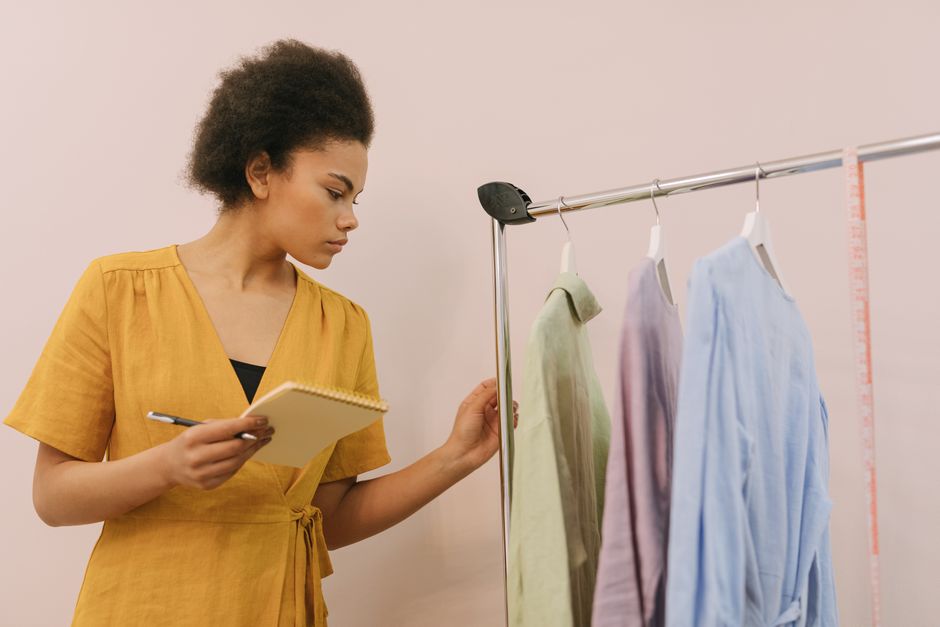
Use the same inspection routine every time you shop. It stops a flattering fitting-room mirror from making the decision for you.
Step 1: Check the garment before trying it on
- Hold the fabric toward a light. You should see the weave, but the material should not look patchy or transparent unless that is the intended design.
- Rub a small area between two fingers for ten seconds. Heavy fuzz, surface dust, or instant pilling signals a weak finish.
- Stretch the fabric across the chest, seat, or knees, then release it. It should return close to its original shape.
- Turn the item inside out. Check the seam finish, loose threads, pocket bags, zipper tape, and hem width.
- Read the care label. A basic that needs dry cleaning after every wear will cost more time and money than its price suggests.
Step 2: Test movement, not just appearance
Try sitting, reaching forward, raising both arms, and walking several steps. A shirt that pulls across the back will fail quickly at the shoulder seams. Pants that feel fine while standing may cut into your waist when seated. The correct basic should allow normal movement without constant adjustment.
Keep the item on for at least two minutes. Check the collar, armholes, waistband, and pressure points. If you already want to remove it, do not buy it hoping the garment will become comfortable later. A decade basic must pass the movement test before it passes the style test.
Which Clothing Basics Give You the Best Cost per Wear?
Price alone cannot predict longevity, but cost per wear exposes false bargains. A $20 shirt worn 40 times costs 50 cents per wear. A $60 shirt worn 200 times costs 30 cents per wear, even before repair value enters the calculation.
Compare real examples before you set a budget
| Basic | Material or construction detail | Typical US list price | Best verdict |
|---|---|---|---|
| Uniqlo Supima Cotton T-Shirt | 100% Supima cotton | $19.90 | Best low-cost test piece |
| Everlane Organic Cotton Crew | 100% organic cotton | $30 | Best balanced everyday tee |
| L.L.Bean Pima Cotton Tee | 100% Pima cotton | $34.95 | Best comfort-focused choice |
| Buck Mason Pima Curved Hem Tee | Pima cotton with a structured cut | $50 | Best polished casual option |
| Patagonia Better Sweater Jacket | 100% recycled polyester fleece | $159 | Best durable fleece layer |
Pick the winner for your washing habits
For a frequently washed T-shirt, the Everlane Organic Cotton Crew is the strongest value in this group because its $30 price stays moderate while its simple shape works across seasons. For softness and relaxed daily wear, choose the L.L.Bean Pima Cotton Tee. The Buck Mason tee earns its higher price only if you prefer a more structured silhouette and will wear it often.
The Patagonia Better Sweater Jacket is a different type of basic, so do not compare its $159 price with a T-shirt. It replaces a larger number of weak fleece layers and makes sense for repeated commuting, travel, or outdoor use. Prices can change during 2026 sales, but the buying principle stays fixed: calculate likely wears, then judge the construction.
When a Cheap Basic Is the Wrong Buy
Verdict: buy fewer pieces when a basic sits against your skin, receives weekly washing, or carries your outfit several times a month, because repeated replacement creates a higher cost and more wardrobe clutter than paying for a stronger fabric and repairable seams.
Buy cheaper when the use is genuinely limited
A lower-priced item is sensible for a one-season color, a vacation-specific garment, a messy craft project, or a temporary size change, provided the fabric feels safe against your skin and the seams do not fail before the planned use is over.
Do not pay for durability you will not use
A heavy, expensive shirt is a poor purchase if you dislike its weight, cannot wash it at home, or already know you will reserve it for special occasions, because an unworn garment has a cost per wear of zero no matter how impressive its fiber content looks.
The biggest mistake is buying a supposedly permanent basic in a color, cut, or fabric that does not match your real routine, so choose the version you will reach for after laundry day rather than the one that looks most impressive on a hanger.
How Should You Budget for a Decade Wardrobe?
Budget by wear frequency, not by category prestige. Your best T-shirt may deserve more attention than a formal jacket if you wash and wear it twice each week.
Which basic deserves the biggest budget?
Put the most money into the item that touches your body most often and gets washed most frequently. For many wardrobes, that means T-shirts, underwear, socks, and everyday trousers. The L.L.Bean Pima Cotton Tee is the clearest comfort pick from the comparison above, while the Everlane Organic Cotton Crew is the better choice if you want to buy several colors without pushing the budget too high.
Is natural fiber always the better choice?
No. Cotton is a strong choice for breathable shirts, but recycled polyester can be the better material for a fleece layer that must dry quickly and resist repeated abrasion. That is why the Patagonia Better Sweater Jacket earns a place in a long-term wardrobe even though it is not a natural-fiber garment. Match the fiber to the job instead of treating one material as morally or technically perfect.
How many basics should you buy?
Start with three to five shirts, two pairs of everyday trousers, one warmer layer, and one smart casual layer. Replace only the pieces that fail the ten-minute test or no longer fit your life. A small rotation gives each garment recovery time between wears, which reduces friction, odor, and premature washing.
Cost per wear is the budget number that matters. A $50 basic worn twice weekly can beat a $20 basic that loses its shape after one season.
The Decade-Test Buying Checklist
Use this checklist at the rack, in the fitting room, and again before you remove the tags. A garment does not need to be expensive, handmade, or made from a rare fiber to earn a place in a long-term wardrobe. It needs to survive your actual routine and remain useful after small repairs.
Choose by the job the garment must perform
- For daily T-shirts, prioritize smooth fabric, a flat collar, secure shoulder seams, and a shape that survives sitting and reaching.
- For trousers, check the waistband recovery, pocket openings, zipper, seat seam, and room for normal movement.
- For knitwear, inspect even tension, cuff recovery, yarn density, and whether the care routine fits your laundry habits.
- For fleece or outer layers, check zipper operation, hem binding, pocket construction, and resistance to surface abrasion.
- For every category, reject loose seams, twisted panels, uncomfortable pressure points, and care instructions you will not follow.
Make the final decision in thirty seconds
Buy the garment only if you can name its job, predict at least 50 wears, and explain why its construction suits that job. If you cannot answer all three, leave it in the store. Repairable construction, useful fit, and repeat wear beat a fashionable label every time.
| Wardrobe need | Best buying signal | Clear choice |
|---|---|---|
| Affordable daily tee | Stable cotton fabric and clean collar | Everlane Organic Cotton Crew |
| Soft relaxed tee | Pima cotton and comfortable movement | L.L.Bean Pima Cotton Tee |
| Structured casual tee | Firm hand and dependable shape | Buck Mason Pima Curved Hem Tee |
| Warm repeat-use layer | Dense fleece and secure closures | Patagonia Better Sweater Jacket |