

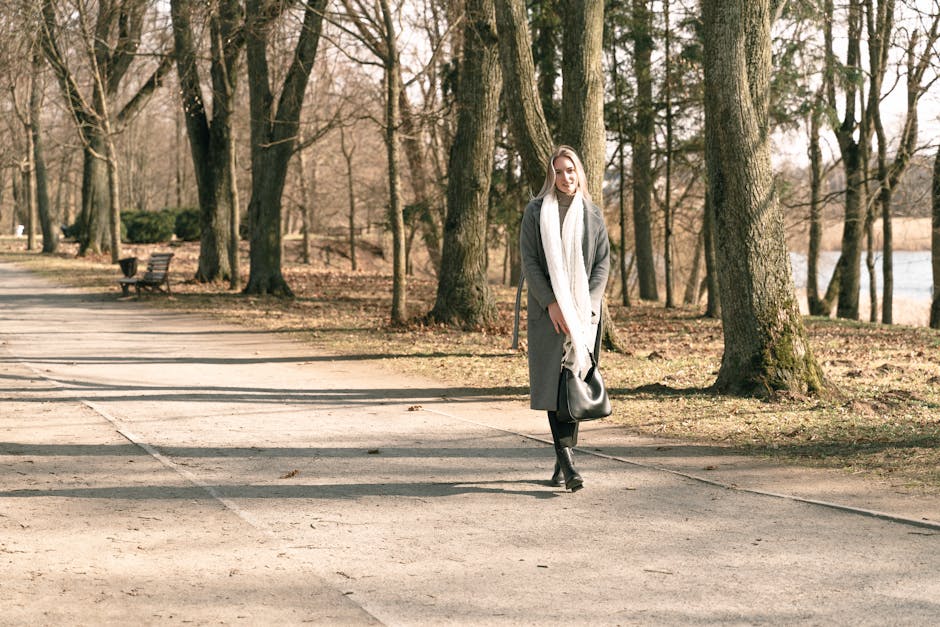
Still cold after wrapping a scarf around your neck three times? You bought the wrong one.
Most scarves sold as winter scarves are fashion items with winter branding. The actual warmth depends on three things: fiber type, fabric weight, and weave density. Fashion brands rarely disclose these numbers — which means most people are guessing at the point of purchase. A thin acrylic scarf and a heavyweight merino wool scarf look nearly identical hanging on a rack and perform completely differently at -10°C.
What Actually Makes a Scarf Warm
Insulation doesn’t come from the fiber itself — it comes from trapped air. Still air is one of the best insulators that exists. What wool, cashmere, and alpaca do better than synthetics is create and hold millions of tiny air pockets within their fiber structure. The denser and more numerous those pockets, the more heat stays on your body instead of escaping into cold air. Every material and construction decision either protects those pockets or destroys them.
The Fiber Hierarchy: What Works Below Freezing
Here’s the practical ranking from coldest to warmest, without marketing language:
- Acrylic and polyester blends sit at the bottom. They’re cheap, pill fast, and trap moisture against your skin rather than wicking it away. Once your neck is damp, your body spends more energy staying warm and the scarf stops contributing. Avoid anything primarily acrylic for temperatures below -2°C.
- Cotton is useless in serious cold. It absorbs moisture and stops insulating the moment it gets wet — which happens fast in snow, sleet, or even just breathing into the fabric. Fine for autumn, not for winter.
- Merino wool is the practical choice for most people. It wicks moisture away from skin, resists odor after days of wear, and maintains warmth even when damp. Fine-grade merino under 17.5 microns doesn’t itch against bare skin — which matters when you’re wearing a scarf directly against your neck all day.
- Lambswool is slightly coarser and thicker than merino. What it gains is durability and better performance in wet, windy conditions. The natural lanolin in lambswool repels water longer than most wool grades, making it the better choice for coastal climates or wet snowfall.
- Cashmere requires specifics. A 1-ply cashmere scarf at 100g per square meter is less warm than a mid-weight lambswool at 280g per square meter. Cashmere’s warmth advantage only shows up when weights are comparable — at equivalent GSM, cashmere edges out merino because its fiber structure traps air slightly more efficiently. Don’t assume the word cashmere means warm. Check the weight.
- Alpaca is warmer than cashmere, naturally hypoallergenic, and rarely found in mainstream retail at a fair price. If you run cold and have a budget above $150, seek out a heavyweight alpaca scarf. It’s the ceiling of practical scarf insulation.
Weight and Weave: The Numbers That Separate Warm from Cold
Fabric weight is measured in grams per square meter (GSM). Below 200 GSM in any natural fiber: autumn use only. 250–300 GSM: solid winter performance. Above 300 GSM: genuine cold-weather insulation. Most fashion scarves at department stores run 150–180 GSM and don’t tell you that.
Weave is the other variable. Open-knit and lacy weave patterns bleed heat — the physical gaps let cold air move through without resistance. If you hold the fabric up to a window and see clear daylight through a pattern of holes, wind will get through just as easily. Dense, tight knits trap air more effectively. A chunky open-loop scarf looks substantial but performs poorly in wind; a medium-weight tight-weave wool outperforms it every time the temperature drops.
Size Equals Coverage
A scarf shorter than 170cm doesn’t give you enough length to double-wrap and still tuck ends into a coat collar. Width below 25cm leaves your upper chest exposed. Infinity scarves eliminate both problems by keeping all the fabric secured at your neck and chest with nothing hanging loose or unraveling mid-commute.
For wet conditions specifically — wet snow, sleet, coastal wind — a tighter weave matters more than fiber alone. A small percentage of silk in a wool blend (5–10%) adds meaningful wind resistance without adding noticeable weight or bulk.
The 7 Scarves Worth Buying
Specific products that actually deliver warmth, not just the right buzzwords on the label.
| Scarf | Material | Approx. Price | Best For | Warmth Level |
|---|---|---|---|---|
| Pendleton Merino Wool Muffler | 100% heavyweight merino | $95 | Everyday winter commuting | High |
| Barbour Large Tartan Lambswool Scarf | 100% lambswool | $75 | Wet and windy conditions | High |
| Fjällräven Sarek Wool Scarf | 85% wool, 15% polyamide | $85 | Hiking, outdoor activities | High |
| Canada Goose Logo Patch Scarf | Wool/cashmere blend | $220 | Extreme cold, urban commuting | Very High |
| Smartwool Merino 250 Neck Gaiter | 100% merino at 250 GSM | $42 | Running, skiing, active use | High |
| L.L.Bean Chunky Fisherman Knit Scarf | Heavyweight acrylic blend | $59 | Casual wear, temps above -5°C | Moderate |
| Acne Studios Canada Wool Scarf | Double-faced 100% wool, 200cm x 50cm | $310 | Style-forward with serious warmth | Very High |
The Pendleton Merino Muffler is the right pick for most people. It’s heavyweight merino at 190cm x 30cm — enough length to double-wrap and tuck, and enough weight to perform down to around -15°C when wrapped properly. Pendleton discloses its fiber composition, which immediately separates it from most fashion-branded scarves that just say “soft feel” on the tag and leave it there.
The Barbour lambswool is the better choice in wet conditions. Lambswool retains more loft and warmth when damp than fine merino does, and the tartan weave on the Barbour is tight enough to provide genuine wind resistance without feeling stiff. For coastal cities or anywhere that gets slushy rather than dry powder, start here instead of with merino.
The Fjällräven Sarek is built for outdoor activity. That 15% polyamide adds abrasion resistance and wind protection that pure wool can’t match — the result is a scarf that handles being stuffed in a pack, worn while skiing, and used in rain without degrading. It lacks the luxury feel of the Pendleton but outperforms it when conditions get rough.
The Canada Goose and Acne Studios picks cost real money and are genuinely better. The wool/cashmere blend in the Canada Goose scarf delivers more warmth at lower weight than straight wool. The Acne Studios Canada scarf is double-faced — two complete woven wool layers — which means it doesn’t rely on air pockets alone. It’s also 200cm long and 50cm wide. At -20°C, size and layering matter as much as fiber grade.
The L.L.Bean chunky fisherman knit is the honest exception on this list. Acrylic is not the best material. But the thick-loop construction traps enough air to work for mild winter days above -5°C and short outdoor exposure — walking between heated buildings, running a quick errand. If you’re standing on a platform for 20 minutes regularly, upgrade to wool. The $36 price difference between the L.L.Bean and the Pendleton is worth it.
The Mistake Making You Cold Right Now
You bought a scarf that said “cozy” or “soft” and assumed those words meant warm. They don’t — soft almost always means acrylic. Acrylic moves moisture toward your skin instead of away from it. Check the material label before you buy anything. If it doesn’t say wool, cashmere, or alpaca, you’re wearing a fashion accessory, not insulation.
How to Wrap a Scarf So It Actually Works
The warmest scarf you can buy loses half its value worn wrong. Most people wear it wrong.
- The double loop for -5°C and below: Fold the scarf in half lengthwise so it becomes a long, narrow strip. Drape it around your neck with the folded loop on one side. Thread both loose ends through the fold and pull snug. You now have two complete layers of fabric at your neck and upper chest. This is the standard method for serious cold — not a style choice, a functional one.
- Tuck the ends inside your coat: Loose ends hanging outside your coat create a convection current — warm air escapes upward and cold air pulls in from below. Tuck both ends under your lapels or push them inside your collar before you button up. Small habit, noticeable difference.
- Layer under a hood, not over it: If you’re wearing a hooded jacket or parka, put the scarf on first and then pull the hood over it. This pins the scarf in place at the back of your neck — the gap most people leave completely exposed — and stops wind from getting under the hood.
- Pull up over your chin in wind: With a double-loop wrap, you have enough extra fabric to pull the outer layer up over your chin and lower nose when wind picks up. Wind chill against bare facial skin drives heat loss faster than any gap in your coat. Use the coverage you already have.
- Loose wrap, not tight knot: Compressing wool fibers with a tight knot destroys the air pockets doing the actual insulating. A firm, snug double loop — not cinched hard — is warmer than something twisted tight against your skin. Comfortable pressure, not constriction.
If your scarf keeps unraveling during a commute, the knit structure is too loose for practical cold-weather use. A scarf that needs constant readjustment at -10°C becomes a liability. The double-loop method above solves it for most scarves; if yours still won’t stay, an infinity scarf design or a proper neck gaiter eliminates the problem entirely.
When to Skip the Scarf and Get Something Else
Is a balaclava warmer than a scarf for extended outdoor exposure?
Yes, almost always. A balaclava covers your neck, chin, lower face, and head simultaneously — no gaps, no shifting, no readjusting. The Smartwool Merino 250 Balaclava runs about $55 and outperforms most $150 scarves in functional warmth delivered per square centimeter of coverage. For anyone working outside, skiing, or commuting in sustained wind below -15°C, a balaclava is the more efficient tool. The tradeoff: harder to adjust indoors, and the aesthetic is unambiguously tactical.
Does a neck gaiter outperform a traditional scarf for active use?
For running, skiing, cycling, or hiking: yes, every time. A traditional scarf shifts, unwinds, and gets caught in zippers. The Buff Midweight Merino Wool Multifunctional neck gaiter costs about $35, weighs under 100g, compresses to nothing in a jacket pocket, and can be pulled up over your nose in under two seconds. For any activity where you’re moving consistently, the gaiter wins on every practical measure except style flexibility.
What if budget only allows one cold-weather accessory?
Buy a hat. Your head loses heat significantly faster than your neck. A good merino wool beanie — the Icebreaker Merino Reversible Rib Beanie runs $60 — paired with pulling your coat collar up does more for your overall warmth than a scarf worn with an uncovered head. Get the hat first. Once you have it, the scarf becomes the logical next addition. A merino beanie and a merino neck gaiter together cover both zones for under $100 total, and that combination beats a single expensive scarf worn alone.