

Fashion retailers process an estimated $816 billion in returns globally each year. Fit — not quality, not price — is the reason most items go back. A significant share of those failures trace to one overlooked variable: the same silhouette does not behave the same way on different body proportions.
Body type guides have existed in fashion for decades. Most are frustrating. They use vague language, name five shapes after fruit without explaining the mechanics, and recommend that you “create curves” without telling you how fabric and silhouette actually interact with your measurements.
This guide covers the principles behind the recommendations, the cases where common advice fails, and specific brands and cuts with real prices — not just categories.
The Five Body Shape Categories — and What the Measurements Actually Tell You
The standard five body shapes — hourglass, pear, apple, rectangle, and inverted triangle — describe the ratio between shoulder width, waist width, and hip width. That is the entirety of what they measure. They say nothing about height, how weight distributes across the torso, or where you carry muscle versus fat. That limitation matters more than most guides acknowledge.
How to Measure Yourself Accurately
You need three numbers: bust (fullest part), waist (narrowest point, typically one inch above the navel), and hips (fullest point, typically seven to nine inches below the waist). Use a soft tape measure pulled snug but not compressed. Take measurements in fitted underwear, not over clothing. Do not hold anything in.
| Body Shape | Key Ratio | Example Measurements | Defining Feature |
|---|---|---|---|
| Hourglass | Bust ≈ hips; waist 8–10" smaller than both | 36 / 27 / 36 | Defined waist, balanced top and bottom |
| Pear | Hips exceed bust by 3.5" or more | 34 / 27 / 39 | Wider at hips and thighs than shoulders |
| Apple | Waist equal to or exceeding bust or hips | 40 / 38 / 37 | Weight concentrated at the midsection |
| Rectangle | Bust, waist, hips within 3" of each other | 35 / 33 / 36 | Minimal natural waist definition |
| Inverted Triangle | Bust exceeds hips by 3.5" or more | 40 / 32 / 35 | Broader shoulders and bust, narrower hips |
Which Category You Actually Fall Into
Most people fall between two categories. A waist-to-hip ratio of 0.75–0.80 with a bust nearly equal to hips is a soft hourglass. A pear with broader shoulders is sometimes called a figure eight. Do not spend time agonizing over the label — use the category that most closely matches your dominant proportion challenge. If your measurements place you squarely between pear and rectangle, dress for whichever set of principles has worked better in your direct experience. The categories are a shortcut, not a verdict.
Hourglass and Rectangle Bodies: The Styling Gap Between Them Is Enormous

These two shapes are treated as opposites in most guides, and stylists generally agree the contrast is real — but the recommendations for each tend to be oversimplified. The hourglass goal is to honor existing definition without overwhelming it. The rectangle goal is to create the visual impression of definition that is not there naturally. The mechanics behind each are different, and conflating them produces bad advice in both directions.
What Actually Flatters an Hourglass — and the Trap That Catches Most People
The most common mistake hourglass bodies make is wearing clothes one size too tight across the hips in an attempt to show off the waist. The result is a garment that pulls across the hip seam, rides up at the hemline, and creates horizontal stress lines — the exact opposite of what was intended.
Wrap dresses are consistently recommended for hourglass bodies, and the reasoning holds: the adjustable closure lets you cinch at the true waist rather than relying on a fixed seam that may or may not hit the right point. The Reformation Cali Wrap Dress (~$218) and the Free People Bali Wrap Dress (~$148) are both cut with a longer bodice and generous hip allowance. Reformation builds in approximately two inches more hip ease than their straight-cut styles — that matters when your hip-to-waist differential exceeds ten inches.
Avoid boxy, oversized silhouettes. A size-up blazer worn open does not read as intentional styling on an hourglass body — it reads as a fit problem. When this shape wears structured pieces, the structure should follow the silhouette, not obscure it. J.Crew’s Regent Blazer (~$228) is one of the few off-the-rack blazers cut with a genuine waist suppression, which is why it appears in styling recommendations for this shape with unusual consistency.
Pencil skirts typically work well. Bodycon works if there is enough ease through the hip to allow movement without pulling. A-line skirts generally do not serve this shape — they add hip volume the natural proportion does not need.
Rectangle Bodies Have More Options Than Any Guide Suggests
Rectangle bodies are told to "create curves" — partially useful advice and partially misleading. The more accurate framing: rectangle bodies can wear a wider range of silhouettes than almost any other shape, because there is no dominant proportion pulling the eye in one direction.
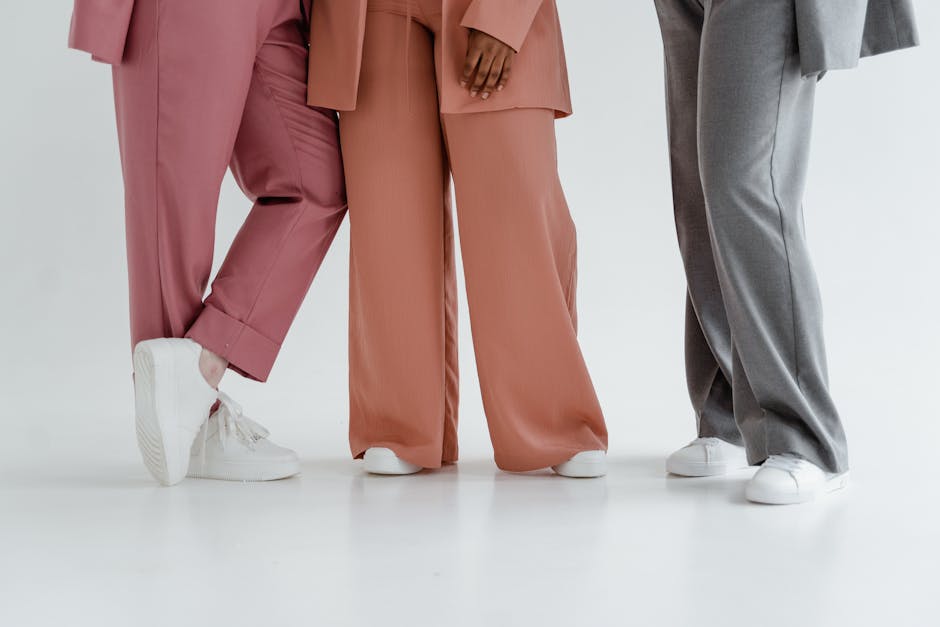
Peplum tops work. Wide-leg trousers work. Tiered skirts work. Structured blazers work. The one category that consistently underserves rectangle bodies: high-waisted straight-cut trousers in a neutral fabric worn with a matching-tone top. This creates a single column of identical color and silhouette with no visual break — it reads flat rather than deliberate.
Banana Republic’s Avery Straight-Leg Trouser (~$120) in a patterned or textured fabric, paired with a cropped fitted top, creates significantly more visual interest than the same trouser in solid black. That is the working principle: use texture, color contrast, or silhouette interruption to add visual articulation the body does not produce naturally. A belt worn through the loops — actually tightened — is also more effective here than most rectangle-shape guides acknowledge.
Pear Shape: Where Generic Advice Consistently Falls Short
Most pear-shape advice is incomplete, and some of it is counterproductive. The standard recommendation — dark colors on the bottom, bright statement tops to draw the eye upward — treats the hips as a problem to be hidden. That framing is limiting and frequently produces results the wearer does not actually want.
What "Balancing Your Shoulders" Actually Means in Practice
The visual goal for pear shapes is proportion balance — making the upper and lower halves read as roughly equal in visual weight. Off-shoulder tops, boat necks, structured blazers, and statement sleeves all add shoulder width, which does create a more balanced silhouette. That part of the standard advice is accurate. The SKIMS Cotton Rib Off-Shoulder Crop Top (~$42) does this effectively because the wide neckline creates horizontal visual emphasis at the collarbone. The goal is not to minimize the hip — it is to give the eye something of comparable visual weight above the waist.
The A-Line Skirt Problem Nobody Talks About
A-line skirts are universally recommended for pear shapes. They are also frequently the wrong choice. An A-line skirt that fits the waist typically adds circumference at the hip, which is the opposite of what most pear shapes find flattering. The volume of the flare often increases hip emphasis rather than reducing it.
What tends to work better: straight-cut or slightly flared midi skirts that skim the hip rather than flare from it. A slip skirt in a solid dark fabric — such as the Reformation Cali Midi (~$168) — creates a clean vertical line from waist to hem without adding volume at the widest point.
Wide-leg trousers are consistently underused for pear bodies. They add visual width at the ankle, which creates a more balanced lower-body silhouette. The Universal Standard Geneva Wide-Leg Pant (~$95, available in sizes 00–40) is cut high at the waist with genuine hip ease — it does not require sizing up to fit through the widest point, which is the specific failure mode of most wide-leg styles on pear-shaped bodies.
Apple and Inverted Triangle Bodies: Two Different Problems, Two Different Fixes
For Apple Bodies — Is Empire Waist Actually the Right Default?
Empire waists are the standard recommendation for apple bodies because the seam sits above the widest part of the torso. The logic is sound. The limitation: empire waists also shorten the torso visually, and when the fabric below carries significant volume, the overall result tends to read shapeless rather than structured.
What generally works better: V-necks, which create a vertical line that lengthens the torso; wrap silhouettes, where the diagonal line is typically the most flattering angle for a rounded midsection; and mid-rise rather than high-rise trousers. High-rise waistbands on apple bodies often land at the widest point, creating a roll-over effect regardless of the size. The ASOS Design Wrap Midi Dress (~$55) combines a V-neckline with a wrap construction — it addresses both proportion issues simultaneously and is one of the more consistently recommended items by stylists working with fuller midsections.
Mid-rise straight-leg denim fits the apple shape better than most "waist-defining" styles, because the goal is a clean fall from hip to hem rather than emphasizing a waistline that does not narrow naturally.
For Inverted Triangle Bodies — The Half of the Advice Nobody Gives
Inverted triangle bodies — broader at the shoulder and bust relative to the hip — are correctly advised to avoid anything that adds shoulder width. Raglan sleeves, boat necks, cap sleeves, and wide-set straps all widen the shoulder line and generally make the silhouette read heavier at the top.
What almost nobody states clearly: inverted triangle bodies can wear wide-leg trousers, voluminous skirts, and bold prints on the bottom half in ways that no other shape carries as easily. The visual weight of a full, patterned skirt balances the broader upper body. Where a pear shape would be overwhelmed by a tiered maxi skirt, an inverted triangle body wears it with ease. The Anthropologie Maeve Tiered Maxi Skirt (~$130) in a printed fabric is a specific example — the volume and pattern draw the eye downward and outward, equalizing what the shoulder line is doing above. V-necks and halter necks reinforce this by drawing the eye inward and down rather than across the shoulder line.
Three Fit Mistakes That Affect Every Body Type
- Buying for your largest measurement and altering nothing. Off-the-rack clothing is graded proportionally. If you size up to fit your hips, the shoulders are also cut for size-X shoulders. A tailor charging $15–$25 for a side seam take-in or a shoulder adjustment turns a $40 dress into something that reads custom. Most people skip this step, then conclude the garment simply does not work for their shape — when the shape is fine, and the fit is not.
- Treating stretch fabric as a fit substitute. Stretch accommodates a range of sizes but does not guarantee a flattering result. A jersey wrap dress that stretches to cover an hourglass hip will have fabric pulling at the widest point rather than falling cleanly. Stretch is a comfort feature. It is not a fit solution, and relying on it as one produces the stress-line problem described above.
- Ignoring fabric weight entirely. Lightweight, drapey fabrics — chiffon, jersey, modal — reveal body shape. Structured fabrics — ponte, canvas, denim, woven cotton — hold their own shape and modify the visual silhouette. This is why a ponte pencil skirt fits differently on the same body than the same silhouette in chiffon. Matching fabric weight to the intended visual outcome is as important as silhouette selection, and most buyers skip this analysis completely.
Body Type Rules vs. Personal Style: Where the Logic Breaks Down
Body type guides describe statistical tendencies — not laws. A pear-shaped person who has found through experience that structured blazers and wide-leg trousers work for them has already solved the problem empirically. These rules also assume the goal is proportion balance, which is not a universal goal. Some dressers want exaggerated silhouettes or deliberate asymmetry. An A-line skirt on a pear body reads wrong by proportion logic and genuinely bold by style intent. Both are accurate readings. Use this framework as a starting point, and discard what contradicts your direct experience.
Quick Reference: Silhouettes by Body Shape
| Body Shape | Best Silhouettes | Typically Avoid | Specific Starting Point |
|---|---|---|---|
| Hourglass | Wrap dresses, fitted sheaths, belted styles | Boxy oversized, drop-waist, full A-line | Reformation Cali Wrap (~$218) |
| Rectangle | Peplum, tiered skirts, textured or patterned trousers | Single-tone column dressing | Banana Republic Avery Trouser (~$120) |
| Pear | Wide-leg trousers, straight midi skirts, off-shoulder tops | Full A-line skirts, high hip volume | Universal Standard Geneva Wide-Leg (~$95) |
| Apple | Wrap silhouettes, V-necks, mid-rise trousers | High-rise waistbands, empire volume | ASOS Design Wrap Midi (~$55) |
| Inverted Triangle | Wide-leg trousers, tiered maxis, printed bottoms | Boat necks, raglan sleeves, cap sleeves | Anthropologie Maeve Tiered Maxi (~$130) |