
The autumn wardrobe audit produces the same feeling every year: real money spent on a piece that somehow still reads behind. AW 2026 showed with unusual directional consensus across London, Milan, and Paris — enough runway agreement to make confident buying decisions, if you know which signals hold across multiple houses and which are one-designer flourishes unlikely to survive contact with daily life.
How to Read a Trend Season Before You Spend Anything
Single-source trend reports are unreliable. When one fashion site calls something the defining direction after a single runway show, the honest question is: who else was doing it?
A direction that appears at three or four significant houses — covering luxury, contemporary, and accessible — has institutional momentum. It will reach high-street retailers, persist across more than one season, and be possible to incorporate without committing to an extreme version of the look. A direction that appears at one avant-garde show and generates significant editorial coverage tends to exist as cultural signal rather than wardrobe direction.
The distinction matters because the costs of following the wrong signal compound. A trend piece that dates within one season costs you the purchase price plus the closet space. A trend piece bought in a durable direction typically earns its cost across multiple seasons and provides more styling flexibility the longer it stays current.
For AW 2026, the evaluation framework is the same as any other season: cross-reference the collections that sit across different aesthetic registers — at minimum, one quiet-luxury house, one directional contemporary label, and one brand with accessible high-street overlap — and note where the signals converge. Where they converge is where the money generally is.
What the AW 2026 Runways Actually Agreed On
Cross-referencing Bottega Veneta, The Row, Loewe, Saint Laurent, Toteme, and Brunello Cucinelli against the AW 2026 pre-collections at COS and Mango gives a clearer picture of where consensus landed than any single trend roundup can offer. The table below maps the strongest directions against their runway breadth, practical wearability, and likely longevity.
| Trend Direction | Key Houses | Runway Consensus | Wearability | Longevity Outlook |
|---|---|---|---|---|
| Soft, unstructured leather | Bottega Veneta, The Row, Loewe | Strong — 14+ shows | High | Multi-season (3+) |
| Deep chocolate and tobacco neutrals | Brunello Cucinelli, Toteme, COS | Strong — luxury to high street | Very high | 3+ seasons |
| Oversized structured tailoring | Saint Laurent, Stella McCartney, COS | Moderate — continuation from AW 2026 | High | 2 more seasons estimated |
| Shearling details and full coats | Loewe, Max Mara, Toteme | Strong in outerwear | High (climate-dependent) | 2–3 seasons |
| Victorian volume — puff sleeves, high collars | Simone Rocha, Erdem | Niche — concentrated in 2–3 houses | Low to moderate | Short |
| Dark florals on heavy fabric | Dries Van Noten, Zimmermann, Erdem | Moderate | Moderate | 1–2 seasons |
The honest read: soft leather and deep neutrals have the cross-house backing to justify real investment. Everything else sits on a spectrum from interesting-but-niche to trend-specific-and-likely-to-date — which is not a reason to ignore them, but a reason to approach them at a different price point and with different expectations.
The Investment Case for Soft Leather — Made Specifically
Soft, unstructured leather is the single most defensible AW 2026 purchase for buyers who want multi-season return on spend. That is not a hedge. It is the direction with the clearest runway consensus, the most straightforward wearability, and the strongest durability argument across all price points.
The important distinction: this is not about structured leather jackets, biker cuts, or anything that announces itself from across the room. The direction that appeared across Bottega Veneta, The Row, and Loewe was quieter — butter-weight trousers in a straight or slightly wide leg, soft leather blazers that read as tailoring at distance, draped overshirts in cocoa and near-black tones that move like heavy woven fabric rather than stiff outerwear.
At The Row’s AW 2026 show, soft leather trousers appeared alongside ribbed turtlenecks and simple footwear. Nothing was announced. The leather was not the point — the proportion and texture combination was. At Bottega Veneta, a cocoa-toned leather overshirt worn open over a heavy-knit crewneck generated more sustained post-show attention than most of the look book, specifically because it answered the question of how to actually wear something rather than just how to present it.
What Quality Soft Leather Costs, and Why the Math Holds
Genuine soft leather at the upper end carries significant numbers. A Toteme leather shirt typically runs £650–£900 depending on cut and season. The Loewe puzzle shirt in soft calf leather sits around £1,400. These are real prices that deserve real scrutiny rather than aspiration-based justification.
The comparison is not against a cheaper garment in the same category. It is against the total cost of a piece across its usable life. Quality cashmere pills. Woven fabric frays at stress points. A sweater worn twice a week through a full autumn typically shows visible degradation within two seasons. Genuine soft leather, maintained with basic conditioning, generally improves with age — the hand softens, the piece conforms to its wearer. Buyers who already own leather pieces from five or more years ago will generally recognize this without needing the argument made explicitly.
For buyers not ready to commit at that level: Mango’s leather-effect blazers in the £99–£149 range and Zara’s leather-look trousers at £49–£79 offer a way to test whether the silhouette actually works in your wardrobe before moving up. The honest caveat is that bonded leather and PU constructions typically degrade within 18 months of regular wear — the surface cracks, the hand changes. Buy them to test the direction, not to own it.
The Silhouette That Works Day-to-Day
Straight or wide-leg leather trousers are the most versatile entry point — easier to style than a leather skirt, less silhouette-dependent than a leather blazer. The cropped leather jacket has cycled through fashion often enough that it now reads as costume more than direction. The leather midi skirt, shown at both Loewe and Saint Laurent, works but demands strict styling restraint: one leather piece per outfit context, everything else neutral and quiet.
Collections consistently showed leather alongside heavy contrasting textures — ribbed wool, bouclé, unfinished shearling. The rough-smooth pairing is what grounded the looks and prevented them from reading as fashion-forward for its own sake. That is an actionable styling note, not just runway observation.
The AW 2026 Color Direction — Three Questions with Direct Answers
Is Brown Really Still the Leading Neutral?
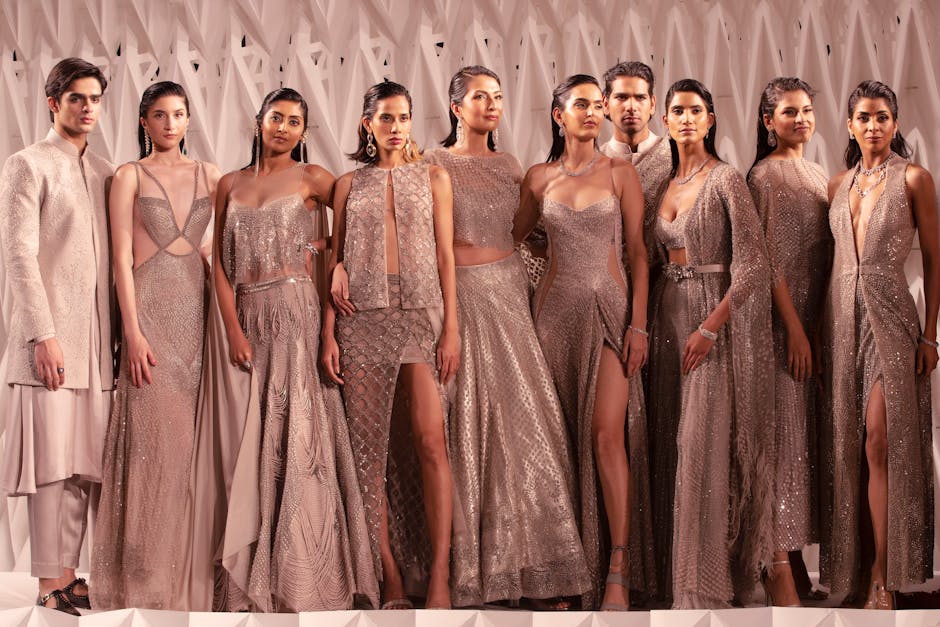
Yes — but the specific shade has moved. The tone that ran from Brunello Cucinelli through to COS’s autumn preview was deep cocoa and tobacco, not the camel and warm beige that dominated AW 2026 through 2026. Richer, darker, closer to near-black brown than sand or tan.
Buyers who already own quality camel outerwear are not facing a loss. Camel and deep cocoa sit adjacent on the palette — they mix rather than clash. The shift is about depth and saturation, not a directional reversal that makes existing pieces obsolete.
What Else Ran Through the Shows?
Forest and moss greens held strongly. Loewe and Jil Sander both showed substantial green across their AW 2026 ranges — not sage or mint, which read as warmer-season colors, but deeply saturated forest tones. Burgundy appeared at Valentino and Saint Laurent in specific pieces, functioning more as accent than as a full palette direction.
The direction to avoid buying into right now: high-saturation electric or neon tones. That direction ran hard through SS 2026 and shows no continuation into AW 2026. A statement piece in electric orange or cobalt blue purchased now swims against the current palette consensus, which typically accelerates how quickly it reads as dated.
How Long Does This Color Story Last?
Deep brown neutrals generally photograph well across seasons, mix easily with black — which has no exit from fashion — and hold their relevance across multiple years before reading as of-their-moment. The last time brown had this kind of multi-house runway backing was approximately AW 2026–2026, and pieces bought then are still in regular rotation for buyers who chose quality versions. That is a meaningful longevity signal for a trend-adjacent color direction.
Which AW 2026 Directions Will Date Badly
Victorian-inflected volume — extreme puff sleeves, high collars, corseted silhouettes — is the most likely candidate for rapid dating. Concentrated at Simone Rocha and Erdem, beautiful on the runway, and extremely specific to a distinct aesthetic universe that most wardrobes do not already occupy. These pieces are expensive to style across multiple contexts and belong to buyers whose wardrobes already live in that register.
Dark florals on heavy fabric — shown at Dries Van Noten and Zimmermann — have a similar profile. Visually compelling. Short cycle. Best approached at accessible price points. There is no durable cost-per-wear case for a statement dark floral at £400. There may be one at £80.
How to Update Your Wardrobe for AW 2026 Without Starting Over
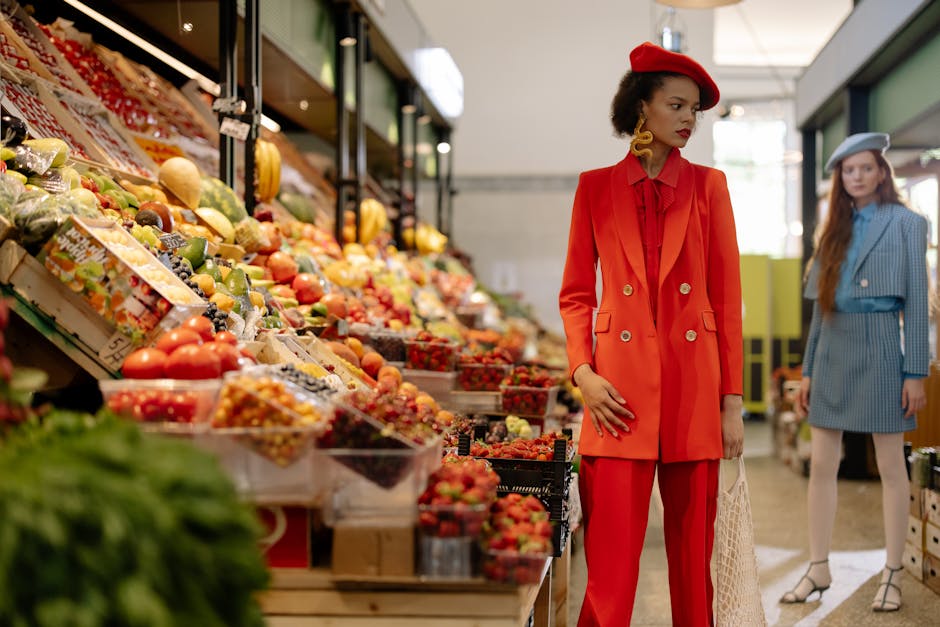
Treating a trend season as a reason to rebuild from scratch is the most expensive possible misreading of runway direction. Collections do not show complete wardrobes — they show directional pieces meant to signal aesthetic position. Three or four deliberate additions are generally enough to move a wardrobe forward meaningfully without dismantling what already works.
- One color investment, chosen for longevity. A single quality piece in deep cocoa, tobacco, or forest green anchors the AW 2026 direction without displacing existing pieces. Max Mara’s chocolate-range coats and Toteme’s tobacco wool outerwear are strong upper-end options. COS offers a reliable mid-range entry for buyers testing the color direction before committing higher.
- Texture update over silhouette update. AW 2026 collections consistently used rough-smooth contrasts — shearling with smooth leather, heavy bouclé with clean tailoring. A shearling collar detail or a bouclé layer transforms an existing wardrobe context without replacing it. The update is often textural, not structural.
- Audit tailoring before buying any. Oversized structured tailoring is a continuation from AW 2026, not a new direction. Quality tailored pieces bought in the last two seasons are typically still current. Buying a new blazer specifically for AW 2026 trend reasons is redundant if neutral tailoring already exists in the wardrobe.
- Hold on bags for now. The bag direction for AW 2026 is less clearly resolved than in previous seasons — the structured versus unstructured argument continued across houses without a definitive winner. Waiting until mid-season, when retailer adoption clarifies the direction, is a reasonable position before any significant bag spend.
- One directional piece per outfit context, maximum. Collections showed restraint: one strong-direction piece, everything else quiet. Soft leather trousers plus oversized tailoring plus a shearling collar in a single look reads as seasonal costume. The season’s actual message is restraint, not accumulation.
The buyers who typically come out ahead in a trend season are those who identify the two or three directions with genuine multi-season staying power — soft leather and deep neutrals, specifically — and invest once at a quality level that lasts, rather than cycling through fast-fashion versions of the same ideas annually until the cost compounds past what a single quality purchase would have been.