

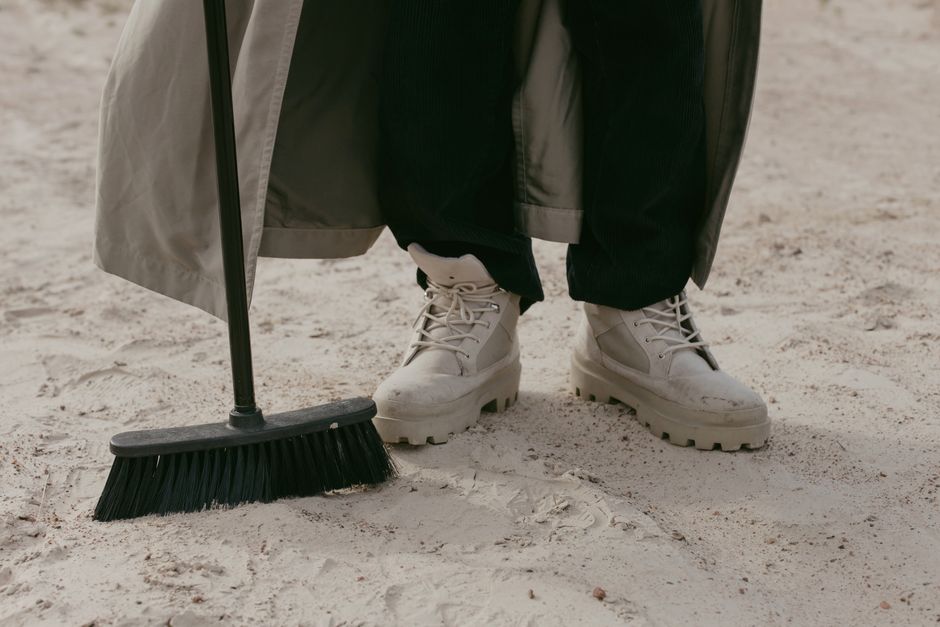
The best March work-shoe system is simple: keep one pair on your feet and one pair drying at home. That two-pair rotation protects leather, keeps wet socks away from your skin, and gives you a clean option when yesterday’s shoes have not recovered. The winning setup is not two identical pairs. Use one pair for wet, dirty commutes and another for office hours, indoor work, or lighter rain.
How to Build a Seven-Day Mud Rotation

Use a fixed schedule instead of deciding at the door each morning. The table below assumes a Monday-to-Friday workweek with one pair of outdoor work shoes and one pair of lighter shoes. Adjust the days, but keep the drying rule: a wet pair gets at least 24 hours before heavy use whenever possible.
| Day | Morning choice | After work | Care task |
|---|---|---|---|
| Monday | Outdoor pair | Remove insoles and laces | Brush off dry mud before storage |
| Tuesday | Lighter pair | Outdoor pair stays open | Wipe salt marks with a damp cloth |
| Wednesday | Outdoor pair | Lighter pair airs out | Check tread for packed mud |
| Thursday | Lighter pair | Outdoor pair stays dry | Condition leather if it feels stiff |
| Friday | Outdoor or lighter pair based on ground | Full weekend clean | Dry completely before the next wear |
Dry shoes in the right order
Take out the insole first. Loosen the laces or open the side zip, then stand the shoes in a room with moving air. Stuff them loosely with plain paper for the first few hours and replace it when damp. Keep footwear at least 60 centimetres from a radiator, heater, or wood stove. Direct heat can shrink leather, loosen adhesive, and harden rubber.
Use the forecast as a trigger
Choose the outdoor pair when rain, melting snow, saturated grass, or temperatures below 5°C dominate the commute. Choose the lighter pair when sidewalks are dry and most of the day happens indoors. If the forecast changes at midday, carry a small plastic bag for wet socks or muddy insoles. The bag protects your work tote; it does not replace drying the shoes once you get home.
The practical verdict is to rotate by exposure, not by calendar. A dry Friday can use the lighter pair, while a muddy Wednesday may need the outdoor pair again. The schedule creates a habit, but the ground conditions make the final call.
Which Work Shoes Should Fill the Two Slots?
Choose Pair A for protection and Pair B for comfort. The following real models show the tradeoff without turning the rotation into a shopping list. Prices are useful planning figures and can change by size, color, retailer, and sale.
Pick Pair A for traction and protection
The Keen Utility Lansing Mid is the strongest choice for a commuter who walks through wet grass, puddles, and uneven paths but does not want the bulk of a traditional logger-style boot. Choose the Timberland PRO Pit Boss when toe protection and a lower planning price matter more than weight. If safety certification is not needed, the Red Wing Classic Moc is the better long-term leather option, but its traction and water resistance still need regular care.
Pick Pair B for comfort after the commute
The Blundstone 585 is the cleanest Pair B choice for fast on-and-off use, indoor work, and mild rain. The Dr. Martens 1460 Waterproof suits someone who wants a more visible fashion boot and accepts a longer break-in period. Neither should replace a certified safety shoe on a job site. That is the clear line: style and convenience work for ordinary commutes, while workplace hazards require footwear rated for those hazards.
Do not buy two heavy waterproof boots
Two substantial waterproof pairs create more drying time, more weight, and more pressure on the same areas of your feet. The better two-pair plan combines one protective outdoor boot with one lighter shoe. For most readers, the Keen Utility Lansing Mid or Timberland PRO Pit Boss belongs in Pair A, while the Blundstone 585 belongs in Pair B.
How to Dry and Clean Muddy Work Shoes

Cleaning muddy footwear works best in stages. Do not scrub wet mud deeper into the upper. Let the surface dry enough to lift away, then clean the residue, then restore protection. This sequence takes longer than rinsing everything under a tap, but it protects the materials that hold the shoe together.
Step 1: Remove grit before adding water
Take out the laces and insoles. Hold the shoes over a washable floor or newspaper and tap the soles together gently. Use a soft nylon brush or an old toothbrush around the welt, stitching, and tread. A wooden skewer can clear packed mud from deep grooves, but do not force it between glued layers. For suede or nubuck, use a dry crepe brush instead of a wet cloth at this stage.
Step 2: Wash the upper with controlled moisture
Mix a small amount of mild soap into lukewarm water. Dip a cloth, wring it nearly dry, and work in small sections. Do not soak leather boots, flood the collar, or leave fabric shoes sitting in a bucket. Salt marks need a separate pass with a clean cloth dampened with a one-to-one mixture of water and white vinegar, followed by plain water. Test that mixture on a hidden area first because dark finishes can change tone.
Step 3: Dry, condition, and inspect
Open the shoe fully and place it in moving air. Replace damp paper after two or three hours. Once the surface and lining feel dry, inspect the sole edge, eyelets, stitching, and heel. Apply a compatible leather conditioner to smooth leather when it feels dry or looks pale. Do not put conditioner on suede, mesh, or waterproof membranes unless the maker specifically allows it. After conditioning, apply a water-repellent treatment suited to the upper and allow the full cure time listed on the container.
Finish by checking your socks and insoles. A damp insole can make a dry shoe feel wet again, and a worn insole can create heel movement that speeds up lining damage. Replace an insole when it stays compressed, smells after washing, or no longer supports the foot evenly. For persistent odor, remove the insole, let both parts dry completely, and use a small amount of baking soda overnight. Vacuum it out before wearing.
The best care routine is boring and repeatable: brush after muddy days, wash only when needed, dry with air, and condition the material that actually needs it. That routine adds more usable seasons than a stronger cleaning chemical ever will.
When Two Pairs Are Not Enough
Should outdoor workers own a third pair?
Yes, if mud, chemicals, snow, or standing water are part of the job rather than occasional commute conditions. Keep one pair for the work site, one pair for commuting, and one lighter pair for indoor use. Work-site footwear may collect substances that should never enter a home or office. A third pair also prevents a single overnight drying cycle from deciding whether you can work safely the next morning.
When should you choose sneakers instead?
Choose weather-resistant sneakers when the commute is mostly paved, the workplace has no safety-toe requirement, and you value lower weight over ankle coverage. A trail-inspired sneaker with a 4-millimetre lug pattern can handle light mud better than a flat lifestyle sneaker. Skip sneakers for deep puddles, loose ground, or tasks that expose the foot to falling objects, sharp debris, or machinery.
When is one pair enough?
One pair is enough for a short, dry commute, an indoor workplace, and a home with good drying conditions. It is not enough when the shoes regularly become wet before the next wear. The final verdict is direct: for most March commuters, one grippy outdoor pair plus one lighter indoor pair offers the best balance of traction, comfort, cost, and drying time.
Spring footwear is becoming more versatile, but versatility still has limits. The smartest work-shoe wardrobe will keep adding lighter materials, better traction, and easier care without pretending that one pair can handle every surface, forecast, and workday.