

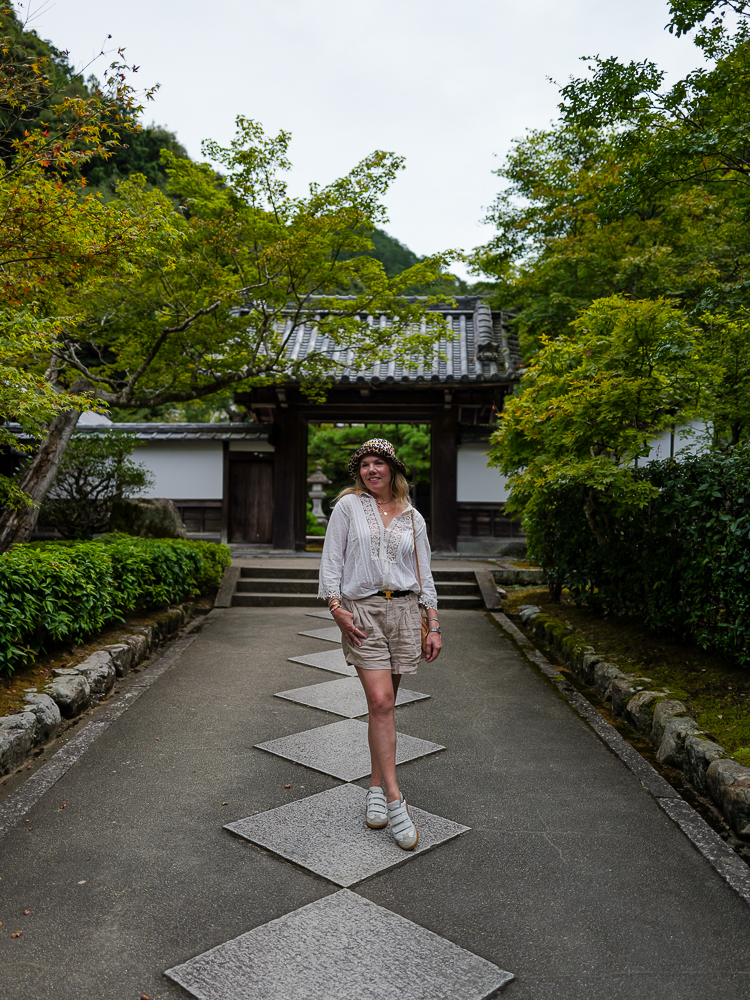
Three days is enough to do Kyoto well. Not exhaustively — but well. The problem isn’t the city — it’s the sequence, the timing, and the shoes.
Why the Standard Kyoto Itinerary Fails Fashion Travelers
The typical travel advice goes: Day 1 Arashiyama, Day 2 Fushimi Inari, Day 3 Gion and Higashiyama. Fine on paper. In practice, it drops you at the bamboo grove at 10am — already packed — and sends you to Fushimi Inari at 2pm on a Saturday, when the famous torii gate tunnel is shoulder-to-shoulder with tour groups. The shot you came for is impossible without cropping out thirty people.
For fashion travelers, this matters more than it does for most visitors. If you want clean outfit shots at the bamboo grove, a kimono photo at Kiyomizudera without strangers in every frame, or actual time to browse Kyoto’s fashion boutiques, you need a plan built around timing — not just a checklist of places.
There’s also the footwear problem, and it’s a real one. Kyoto’s most photographed spots — Higashiyama’s stone-paved lanes, the Fushimi Inari mountain trail, Gion’s cobbled streets — are genuinely hard on feet. Expect 12,000 to 18,000 steps a day on uneven surfaces, often in summer heat and humidity. The wrong shoes don’t just hurt. They end your afternoon early and put you in a convenience store buying plasters at 3pm.
Beyond the logistics: Kyoto has some of the most interesting fashion shopping in Japan. Traditional Japanese brands, a monthly antique kimono flea market, Nishijin silk textile specialists — most travel itineraries don’t budget time for any of it. You’ll walk straight past it without knowing. This plan fixes all three problems.
The Three-Day Plan, Built for Real Life
Two rules govern this itinerary: hit every major spot at its least-crowded hour, and leave breathing room for the things you can’t plan — the textile stall with the perfect vintage obi, the Gion side street that photographs better than the main drag.
| Day | Morning | Afternoon | Evening |
|---|---|---|---|
| Day 1 | Arashiyama Bamboo Grove (7–8am), Tenryu-ji Garden (8:30am, ¥500) | Nishiki Market textile stalls, Teramachi Street | Gion walk, Hanamikoji Street dinner |
| Day 2 | Fushimi Inari Taisha (arrive by 7:30am) | Kimono rental (11am start), Higashiyama stone lanes, Kiyomizudera | Pontocho Alley dinner |
| Day 3 | SOU·SOU and downtown fashion shopping | Nanzen-ji, Toji Flea Market (if the 21st), Philosopher’s Path (late March only) | Late shopping or departure |
Day 1: Arashiyama at Dawn
Take the first train to Saga-Arashiyama. The bamboo grove at 7am is a completely different experience from 10am — quieter, cooler, and the morning light cuts between the stalks in a way that disappears as the day progresses. This is also the only window for clean outfit photos without strangers walking through every frame.
Tenryu-ji Garden opens at 8:30am and costs ¥500 entry. The moss garden and koi pond photograph well in almost any direction, and the tourists haven’t arrived yet. Back in central Kyoto by early afternoon, Nishiki Market has a fashion dimension most people miss entirely. Among the pickle shops and dried seafood stalls, there are textile accessory vendors selling handmade kanzashi hair ornaments, indigo-dyed fabric pouches, and kimono-fabric goods for ¥800–¥3,000. Better souvenirs than anything sold near the major temple gates.
Day 2: Inari Early, Kimono After
Set the alarm. Fushimi Inari before 8am on weekdays, 7am on weekends. The famous torii tunnel photo — receding orange gates, clear of people — is only possible before the crowds arrive. By 9am, it’s a queue. The full summit trail runs 4km round trip with about 230 meters of vertical gain and takes roughly 90 minutes. Most visitors turn back at the second major torii cluster at the 45-minute mark, which still delivers the essential experience and leaves time for the afternoon.
Book kimono rental for 11am. The full afternoon in Higashiyama in a proper kimono is exactly as good as the photos suggest. Focus the walk on Sannen-zaka and Ninen-zaka — the stone side lanes with less crowd density and better wooden architecture for photos than the main approach to Kiyomizudera.
Day 3: Shopping First, Then Temples
Most visitors use Day 3 for Nijo Castle and Philosopher’s Path. Reverse the order. Start with SOU·SOU when it opens, then browse Teramachi’s vintage shops while you have energy and decision-making capacity. If your trip falls on the 21st of the month, go to Toji Temple’s flea market instead of any secondary temple — it’s worth more time than most of the castle interiors. Leave Nanzen-ji for the afternoon, when the morning crowd has thinned considerably and the light in the aqueduct garden turns warm.
What to Actually Wear in Kyoto
Every travel guide says “comfortable shoes and layers.” None explain what that means for Kyoto’s specific terrain or how to balance practicality with looking good in every photo you came here to take.
Footwear — The Decision That Makes or Breaks the Trip
Kyoto’s terrain is harder than most visitors expect. Higashiyama’s stone lanes are sloped and uneven. The Fushimi Inari trail is an actual mountain path with 230 meters of vertical gain. Kiyomizudera involves steep wooden staircases and stone paths that become slick in rain. Gion’s cobblestones are beautiful and punishing in the wrong shoe.
Wear the HOKA Clifton 9 (~¥22,000 / $145) for pure comfort on high-step days. If aesthetics matter and you want something that photographs better with a tapered linen trouser, the New Balance 327 (~¥16,500 / $100) works — slightly less cushioned, but adequate for 15,000 steps. Hard passes: platform sneakers on cobblestone (unstable), ballet flats for a full day (no arch support), sandals without heel straps for the Inari hike (you’ll regret it around step 400).
On kimono rental days, the shop provides traditional zori sandals. They look correct. They’re uncomfortable after about 90 minutes on stone. Pack a small tote bag for the afternoon shoe swap — every experienced kimono rental guest does this.
Colors and Aesthetics for Kyoto’s Backdrop
Kyoto doesn’t require covered shoulders or knees at most temples — that’s a persistent misconception. Wear what you want. But the city rewards restraint aesthetically. Solid muted tones — rust, sage, cream, navy, dusty rose — photograph cleanly against wooden architecture, bamboo, and stone gardens. Loud graphic prints compete with the backdrop rather than working with it. White or cream against the bamboo grove is a visual cliché because the contrast is genuinely that clean.
Seasonal specifics: spring (March–May) runs 10–20°C — light layers and a structured jacket. Summer (June–August) hits 30–35°C with serious humidity — linen trousers and a breathable top, nothing more. Autumn (September–November) is the most photogenic season at 15–25°C, and the foliage adds warm tones that complement most neutral outfits. Winter requires a proper coat, but bare temples against grey stone photograph particularly well if you dress with that backdrop in mind.
The Fushimi Inari Outfit Problem
White outfits and the Inari mountain trail are incompatible. The path is dusty, often damp after rain, and involves real exertion. Save the clean white aesthetic for Kiyomizudera on Day 2. At Inari, wear dark breathable layers you don’t mind hiking in — the shot you came for is the gates, not your outfit.
Kimono Rental: Which Shops Are Worth the Money
Rent a kimono. Walking through Higashiyama’s stone lanes in a proper kimono, past wooden teahouses and paper lanterns, is one of those rare travel experiences that actually delivers on the version you imagined before the trip. The city was built for this exact aesthetic.
The shop determines most of that experience. Budget chains — Kimono Rental Wargo (¥3,500–¥4,500) and Vasara Kyoto (¥3,500–¥5,000) — rent polyester kimonos. They photograph acceptably from a distance. They feel synthetic, the fabric doesn’t drape correctly, and you’ll spend the afternoon aware you’re wearing a costume rather than an actual garment.
For quality, Okamoto Kimono Rental in the Higashiyama district is the right call. Half-day packages run ¥8,000–¥15,000 depending on the fabric and accessories selected. They carry silk and high-quality blended fabrics, include professional hair styling, and the staff know how to fit a kimono properly — the difference is visible in every photo. If Okamoto is fully booked, Yume Kyoto charges ¥5,000–¥9,000 and is a meaningful step up from the budget chains without the Okamoto price tag.
Clear verdict: Okamoto for the full experience, Wargo or Vasara if budget is the genuine constraint. Book four to six weeks in advance for any spring or autumn visit. Quality shops are completely booked by three weeks before peak-season dates.
Where to Shop Japanese Fashion in Kyoto
Kyoto is not the place for chain stores or fast fashion. It’s where you find things with actual craft behind them — products that look better the more you understand how they’re made.
- SOU·SOU (Fuyacho Street, Nakagyo-ku) — Kyoto-based brand applying traditional Japanese textile patterns to contemporary clothing and accessories. Tabi split-toe shoes from ¥7,700. Fabric accessories and small goods from ¥3,000. This is the cleanest bridge between Kyoto’s traditional aesthetics and wearable modern fashion you’ll find in a single shop. First stop on Day 3 when it opens at 11am.
- Toji Temple Flea Market (21st of each month, 5am–4pm, Minami-ku) — Antique kimono from ¥500–¥5,000. Vintage obi belts from ¥1,000–¥8,000. Old silk fabric sold by the meter, handmade textile accessories, ceramic goods. Arrive by 8am. The dealers with the best silk pieces and the buyers who know what they’re doing are both gone by noon. If your trip dates include the 21st, this changes the shape of your entire day.
- Nishijin Textile Center (Imadegawa-Horikawa, Kamigyo-ku) — Nishijin is Kyoto’s historic silk weaving district, producing some of the finest woven fabrics in the world. The center runs free demonstrations of traditional loom-weaving techniques and sells silk scarves, fabric accessories, and decorative goods. Items range from ¥2,000 for small accessories to several hundred thousand yen for full hand-woven kimono. For anyone serious about Japanese textile craft, this is worth an hour.
- Teramachi Street vintage (pedestrian stretch between Sanjo and Shijo) — Several vintage shops mixing Japanese and Western vintage. Less curated than Tokyo’s Shimokitazawa, but prices are better and the Japanese vintage pieces — old printed tees, kimono-fabric bags, repurposed textile goods — are more interesting than most Tokyo equivalents. Budget ¥2,000–¥15,000 depending on what you’re hunting.
Two Things You Can Skip
Philosopher’s Path outside of late March cherry blossom season is a pleasant canal walk. Nothing more. Nijo Castle is well-preserved and historically significant, but it takes 1.5–2 hours and adds nothing to a fashion or aesthetic itinerary — that time is better spent at SOU·SOU or Toji market on the 21st.
You showed up in Kyoto with an early alarm set, an Okamoto Kimono slot booked six weeks out, and the right shoes on your feet. You leave with a SOU·SOU tabi bag, a vintage obi from Toji market, a clean bamboo grove shot at 7am, and feet that still work. That’s the trip done right.