

You are standing in front of a full closet, yet nothing feels right. The rails are crowded with impulse buys, worn-out basics, and pieces that only work with one outfit. That was my starting point in 2026. I wanted a secondhand-only wardrobe, but I quickly learned that buying used clothing is not the same as buying less clothing. The real shift came from building rules before opening another resale app.
Start with a closet audit, not a thrift-store haul
Count the clothes you actually wear
My first recommendation is simple: audit your existing wardrobe before buying anything. I tracked every item I wore for 30 days and marked each piece as daily, occasional, difficult, or ignored. The result was more useful than a mood board. I had plenty of tops, but almost no reliable trousers. I owned five jackets, yet only two worked in rain. My wardrobe did not need more personality. It needed better links between the clothes already hanging there.
Use gaps to set your buying order
A secondhand wardrobe becomes expensive when every attractive find feels urgent. I ranked gaps by how often they affected my week, then set a maximum number of pieces for each category. The table below became my filter.
| Wardrobe area | Target quantity | Action before buying |
|---|---|---|
| Everyday tops | 8 to 12 | Keep the best fabrics and remove duplicates |
| Trousers and jeans | 4 to 6 | Measure the best-fitting pair at home |
| Jackets and coats | 3 to 5 | Check weather, work, and weekend needs |
| Shoes | 3 to 5 pairs | Replace worn soles before adding a style |
| Occasion clothing | 2 to 4 outfits | Choose pieces that work for more than one event |
The best first purchase is the item that solves the most repeated outfit problem. That rule saved me from confusing novelty with progress.
Build around outfit gaps instead of personal style labels
The three-basket test
The strongest choice is to stop shopping for an identity and start shopping for complete outfits. Divide your wardrobe into three baskets: clothes you wear weekly, clothes you want to wear but cannot style, and clothes that only look good in theory. The second basket usually holds the most valuable information. A skirt may be beautiful, but if it needs a special shoe, a perfect top, and warm weather, it is not a useful foundation piece. A plain cardigan that works with jeans, work trousers, and a dress has more wardrobe power.
Make the one-new-piece rule stricter
I also used a two-outfit test. Before buying a secondhand item, I had to name two complete outfits using clothes already at home. Then I asked if I would still want it after seeing the flaws in person. This stopped me from buying pieces that needed extra purchases. My clear verdict is to buy for outfit connections, not for the thrill of finding something rare; a smaller wardrobe with ten dependable combinations feels more generous than a packed closet full of isolated clothes.
Choose used versions of durable pieces first
Start with items that have a repairable life
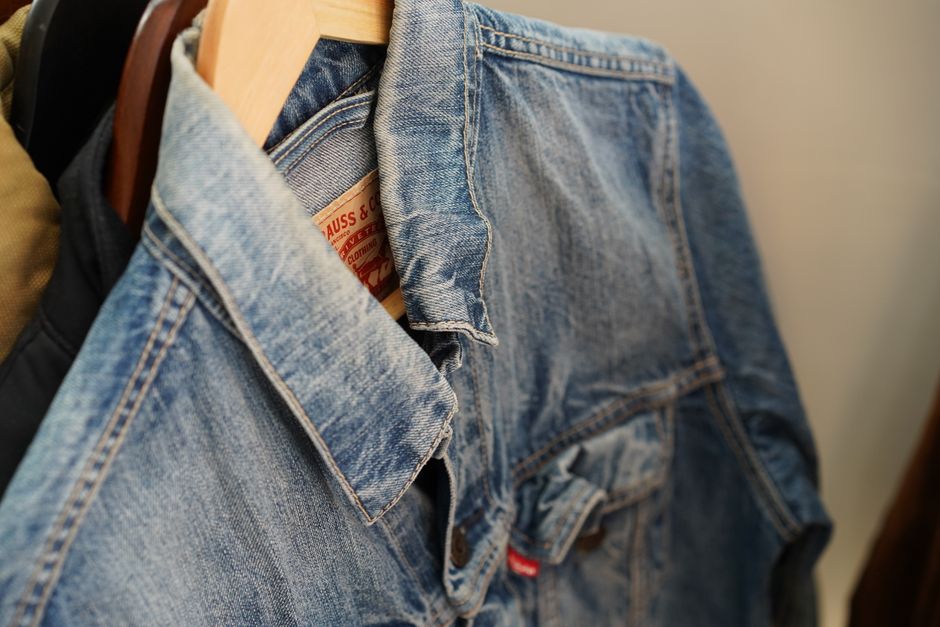
Once my wardrobe gaps were clear, I introduced products halfway through the process. I focused on garments with sturdy materials, recognizable sizing, and resale records. My first target was a pair of Levi’s 501 Original jeans in a 30×30 fit. I set a used-price ceiling of $35 to $55 and checked the waist, inseam, crotch seam, and hem before paying. The 501 was a strong choice for me because the straight leg worked with sneakers, boots, and loafers. I did not buy it because the label was famous. I bought it because one pair covered three weekly outfits.
Use fabric and construction as your quality test
For outerwear, I chose a secondhand Barbour Bedale waxed-cotton jacket. My target was $90 to $150 for a clean jacket with intact hardware and no strong storage odor. I checked the cuffs, lining, zipper, pocket corners, and wax condition. The Bedale made sense for a rainy commute, but it would be a poor purchase for someone who wants a lightweight coat for hot weather. Used clothing still needs to match your climate and routine.
Set different price ceilings by category
My third useful purchase was a pair of Dr. Martens 1461 Oxford shoes, size UK 5, for $45 to $75. I inspected the soles and searched for deep cracks around the leather flex points. A Patagonia Better Sweater quarter-zip in women’s medium became my cold-weather layer at $35 to $60 used. These were not automatic recommendations for everyone. They were category examples with hard limits. For me, the Levi’s 501 offered the best value because I wore it twice a week; the Barbour was worth the higher price because it replaced two weaker jackets. The lesson is clear: pay more only when the item solves a frequent problem and can survive repairs.
Use a repeatable method for every secondhand purchase
The six checks that prevented most mistakes
The winning purchase method is boring, fast, and consistent. I used the same checks in a charity shop, a vintage market, and an online resale listing.
- Measure first. Compare the seller’s measurements with a garment that fits you well. Do not trust the labeled size alone.
- Inspect high-stress areas. Check collars, underarms, crotch seams, cuffs, hems, pockets, and shoe soles.
- Ask about fabric care. A dry-clean-only item may cost more to maintain than its purchase price suggests.
- Check the return rule. For online listings, buy only when the seller shows clear photos and gives a usable measurement chart.
- Calculate the full cost. Add shipping, tailoring, cleaning, repairs, and missing buttons.
- Wait 24 hours. Save the item, close the app, and see if the outfit still makes sense the next day.
The biggest mistake is treating a low price as proof of value. A $12 blouse with a broken zipper, poor fit, and no outfit partner is still a bad buy. A $60 coat that replaces three purchases may be the cheaper decision.
Q&A: What happens when secondhand-only gets hard?
What should I do when I cannot find the exact item?
Choose a substitute by function, not by appearance. If you need a black work trouser, search for the right rise, fabric weight, waistband, and hem length before chasing a particular label. I waited six weeks for a specific color of cardigan, then bought a similar wool blend that worked with more of my clothes. The wardrobe improved because I accepted a close match with better use.
Should damaged clothing always be repaired?
No. Repair clothing when the flaw is small, the fabric is strong, and you already know you will wear the piece. Skip repairs on stretched elastic, brittle faux leather, severe moth damage, or major seam failure. A $20 alteration is sensible on a well-fitting coat. It is wasted money on a garment that already feels wrong.
What was the hardest part of the challenge?
The hardest part was waiting. Secondhand shopping rewards patience, but modern shopping trains us to solve discomfort immediately. My triumph was not finding a rare designer piece. It was wearing the same dependable clothes for months without feeling deprived, then buying only when a real gap appeared.
A secondhand-only wardrobe works when every purchase earns its place through fit, repeat wear, and a clear job.