


Standing on a wind-whipped pier in Bergen or navigating the narrow, rain-slicked alleys of Edinburgh reveals a truth that no glossy travel brochure ever mentions: the European sky is a fickle companion. For those unaccustomed to the continent’s diverse precipitation patterns, the first instinct is often to reach for a cheap umbrella, only to see it inverted by a gust of wind within seconds. True weather protection in Europe is not merely about staying dry; it is about managing the complex relationship between external moisture and internal body heat. Selecting the right garment requires a nuanced understanding of how different textiles interact with moisture, humidity, and the specific wind-chill factors prevalent from the Mediterranean to the Arctic Circle.
Most people make the mistake of buying for aesthetics alone, only to find that their stylish trench coat absorbs water like a sponge after twenty minutes of a Berlin downpour, or their high-tech hiking shell makes them look like they are lost on their way to the Everest base camp while they are just trying to grab a coffee in Milan. The European climate demands a hybrid approach—gear that can withstand the horizontal rain of the Atlantic coast while remaining breathable enough for a crowded metro ride in Paris. This guide breaks down the technical specifications and real-world performance of the leading options on the market today, ensuring you remain comfortable regardless of the forecast.
Understanding Waterproof Ratings and Breathability for European Climates
Before looking at specific brands, we need to address the two metrics that determine your comfort: the Hydrostatic Head (HH) rating and the Moisture Vapor Transmission Rate (MVTR). If you ignore these, you are essentially gambling with your comfort. The Hydrostatic Head measurement tells you how much water pressure a fabric can withstand before it starts leaking. It is measured in millimeters, representing the height of a column of water that can sit on the fabric before it penetrates the fibers.
For a casual walk in London or a light drizzle in Rome, a rating of 5,000mm is usually sufficient. However, if you are facing the heavy, wind-driven rain of the Norwegian fjords or the Scottish Highlands, you should aim for 15,000mm or higher. In these extreme conditions, the pressure of the wind actually forces water through the fabric, meaning a low HH rating will fail even if the rain itself isn’t particularly heavy. High-end technical shells often reach 28,000mm, which is essentially impervious to any natural rainfall.
Breathability is the other side of the coin, often measured in grams per square meter (g/m²/24hr). This is where many cheaper raincoats fail. A coat made of pure PVC or heavy rubberized cotton will keep every drop of rain out, but it will also keep all your sweat in. In a humid city like Paris or during a brisk walk to a train station, you will end up soaked from the inside out. Look for garments with a breathable membrane like Gore-Tex or proprietary alternatives like H2No or Texapore. These materials have microscopic pores that are small enough to block liquid water molecules but large enough to allow water vapor (sweat) to escape. A rating of 10,000g/m² is acceptable for urban commuting, while 20,000g/m² is necessary for active pursuits like hiking or cycling through the rain.
The Three-Layer System Explained
When researching high-end rainwear, you will frequently encounter terms like ‘2-layer,’ ‘2.5-layer,’ or ‘3-layer’ construction. This refers to how the waterproof membrane is protected. A 3-layer jacket bonds the outer face fabric, the waterproof membrane, and an internal liner into one single piece of material. This is the gold standard for durability and ‘next-to-skin’ comfort, as the liner protects the membrane from body oils and abrasion. 2.5-layer jackets use a printed coating on the inside instead of a full fabric liner; they are lighter and more packable but can sometimes feel ‘clammy’ against your arms if you are wearing a short-sleeved shirt. 2-layer jackets feature a separate hanging mesh liner, which is common in casual lifestyle jackets but adds bulk and weight.
Heavy-Duty Protection for Northern Europe and Scandinavia
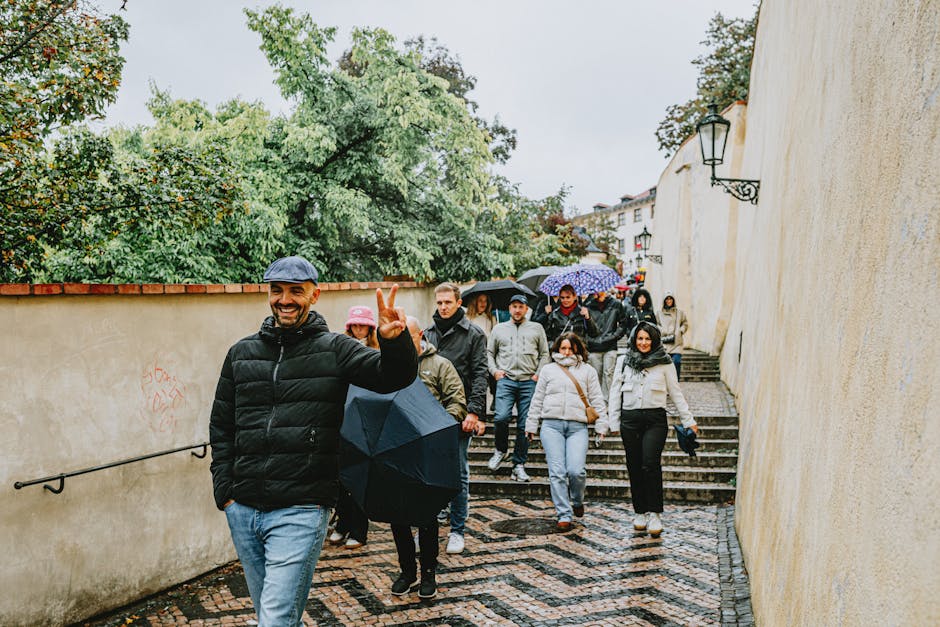
If your primary concern is staying dry during hours of exposure to heavy rain, and you aren’t planning on doing high-intensity exercise, the traditional rubberized coat is often the most reliable choice. These garments do not rely on chemical coatings (DWR) that wear off over time. Instead, they use physical barriers—usually PVC or PU-coated cotton—to block water entirely. This category is dominated by Scandinavian brands that have spent decades perfecting the art of the ‘slicker’ to combat the relentless North Sea weather.
Stutterheim Stockholm
The Stutterheim Stockholm is perhaps the most iconic example of the modern European raincoat. It is based on a traditional fisherman’s coat used by the founder’s grandfather. It utilizes a heavy-weight 530-gram rubberized cotton. There are no taped seams because the seams are double-welded, making it virtually impossible for water to penetrate.
Approximate Price: €230 – €250
Specs: 52% Cotton, 48% Polyester coating; 100% waterproof.
Pros: Extremely durable, timeless aesthetic, 100% waterproof in even the heaviest downpours, does not require re-proofing.
Cons: Zero breathability, quite heavy (approx. 1kg), can be stiff in cold weather, lacks a technical hood adjustment.
Helly Hansen Moss Jacket
Drawing from their heritage in commercial fishing gear since 1877, Helly Hansen’s Moss Jacket uses their ‘Helox+’ technology. It is a more affordable, slightly lighter alternative to the Stutterheim. It is designed for those who need utility over high-fashion but still want to look presentable in a coastal town. The fabric is stretchy, which offers a better range of motion than more rigid rubber coats, making it a favorite for those who need to move around a lot in wet conditions.
Approximate Price: €80 – €100
Specs: Polyurethane-coated polyester; PFC-free.
Pros: Excellent value, soft and flexible fabric, classic nautical look, includes a repair kit in some regions.
Cons: Lacks internal pockets, can feel very warm if the sun comes out, the fit is quite oversized.
Elka Sønderby Jacket
Elka is a Danish brand that originally specialized in industrial-grade rainwear for deep-sea fishermen. The Sønderby is their lifestyle crossover, offering a more refined silhouette while maintaining the legendary waterproofness of their workwear. It uses a slightly thinner PVC-coated fabric than Stutterheim, making it a bit more manageable for daily urban use while remaining completely impervious to water.
Approximate Price: €160 – €180
Specs: 320g PVC/Polyester blend.
Pros: Very high build quality, more flexible than other heavy coats, unique heritage story.
Cons: Harder to find outside of Northern Europe, limited color palette.
The trade-off with heavy-duty rubberized coats is always ventilation. If you choose one of these, ensure it has underarm eyelets or a back vent to allow at least some passive airflow, or you will quickly overheat during a walk to the station.
Lightweight Packable Options for Variable Central European Weather
For many, the ideal raincoat is one that lives in a backpack or a tote bag until the very moment the clouds burst. In cities like Prague, Vienna, or Amsterdam, the weather can shift three times in a single afternoon. You need something that is light enough to carry all day but technical enough to handle a serious storm. This is where ‘shells’ come into play, utilizing advanced membranes to balance weight and protection.
Patagonia Torrentshell 3L
The Torrentshell has long been a favorite for its balance of price and performance. Unlike many ‘entry-level’ rain jackets that use 2-layer construction, Patagonia upgraded this model to a 3-layer H2No Performance Standard shell. This means it lasts longer and feels much better against your skin. It also features ‘pit zips’—zippers under the arms that you can open to dump heat quickly without taking the jacket off, which is a lifesaver when navigating the warm, humid air of a rainy metro system.
Approximate Price: €180 – €200
Specs: 50-denier ECONYL recycled nylon ripstop; 20,000mm HH.
Pros: Exceptional waterproofing for the price, sustainable materials, pit zips for ventilation, packs into its own pocket.
Cons: The fabric is quite ‘crunchy’ and loud when you move; the fit is somewhat boxy and not particularly tailored.
Arc’teryx Beta LT
If budget is less of a concern and you want the absolute pinnacle of textile engineering, the Arc’teryx Beta LT is the industry benchmark. Using Gore-Tex 3L, it is remarkably light but feels incredibly robust. The hood design is particularly impressive; it features a three-way adjustment system that ensures the hood moves with your head, so you never find yourself staring at the inside of your own coat when you turn to look for a bus. The micro-seam allowance and tiny seam tape reduce weight and increase breathability.
Approximate Price: €450 – €500
Specs: N40p Gore-Tex fabric with 3L tricot technology; 28,000mm HH.
Pros: Superior fit and articulation, extremely breathable, very lightweight, highly durable zippers.
Cons: Prohibitively expensive for casual users, technical ‘mountaineering’ aesthetic may not suit formal environments.
Jack Wolfskin Stormy Point
A staple brand in Germany and Central Europe, Jack Wolfskin offers the Stormy Point as a reliable, entry-level technical shell. It uses their proprietary Texapore fabric, which provides a solid barrier against wind and rain without the premium price tag of Gore-Tex. It is a “no-nonsense” jacket that prioritizes comfort and soft-touch fabrics over extreme technical specs.
Approximate Price: €90 – €110
Specs: Texapore Core 2L; 10,000mm HH; 6,000g/m² breathability.
Pros: Very soft hand-feel, affordable, reliable windproofing.
Cons: 2-layer construction makes it bulkier than 3-layer shells, breathability is lower than Patagonia or Arc’teryx.
Stylish Waterproofing: The Intersection of Fashion and Function
There is a specific challenge in finding a coat that works for a business meeting in London or a dinner in Milan. Most technical shells look too ‘outdoorsy,’ and traditional wool coats become heavy and sodden in the rain. Fortunately, a few brands have pioneered the ‘technical formal’ category, using high-performance fabrics in silhouettes that mimic traditional tailoring, such as the trench or the car coat.
Norwegian Rain Single Breasted
Based in Bergen—one of the rainiest cities in Europe—Norwegian Rain produces what are arguably the most sophisticated raincoats in the world. Designed by T-Michael, these coats use high-tech recycled polyester membranes from Japan that look like luxury suit wool or heavy canvas but are completely waterproof. They include clever features like a detachable hood and a ‘storm flap’ that protects your neck without the need for a scarf. The design is so refined that most people wouldn’t even realize it is a raincoat until they see the water beading off it.
Approximate Price: €750 – €900
Specs: Three-layer high-tech Japanese fabric; 20,000mm HH.
Pros: High-fashion aesthetic, incredible attention to detail, hidden ventilation systems, extremely high breathability.
Cons: Extremely high price point, heavy compared to technical shells, requires professional care.
Barbour Beaufort Wax Jacket
While not a ‘raincoat’ in the modern synthetic sense, the Barbour Beaufort is a cornerstone of European wet-weather style. Made from 6oz thornproof waxed cotton, it offers a different kind of waterproofing. Instead of a membrane, it relies on a layer of wax to repel water. It is the quintessential choice for the English countryside or a rainy day in a historic city center. The beauty of wax is that it develops a unique patina over time, telling the story of every storm you’ve walked through.
Approximate Price: €350 – €400
Specs: 6oz Sylkoil waxed cotton; 100% cotton lining.
Pros: Timeless style, extremely durable, can be repaired and re-waxed for decades, huge pockets.
Cons: Not 100% waterproof in torrential, multi-hour storms; the wax can transfer to car seats; requires annual re-waxing.
Rains Jacket (Classic)
Rains is a Danish brand that successfully brought the minimalist aesthetic to the masses. Their signature jacket is lightweight, matte-finished, and comes in a variety of sophisticated earth tones. While it is not a ‘technical’ jacket in the sense that it isn’t highly breathable, its thin profile and elegant drape make it a staple for European city dwellers who want to look good during a light commute. It is the perfect ’emergency’ layer that looks intentional rather than accidental.
Approximate Price: €80 – €95
Specs: 100% Polyester with Polyurethane coating; 4,000mm HH.
Pros: Very stylish, affordable, lightweight and easy to pack, great color selection.
Cons: Not suitable for heavy downpours or wind (seams are not as robust as Stutterheim), can become very sweaty during physical activity due to lack of breathability.
Comparative Analysis of Leading European Rainwear
To help visualize the differences between these options, the following table compares the key metrics that should drive your purchasing decision. Note that prices are approximate and can vary based on the specific retailer or seasonal sales.
| Model | Material Type | Waterproof Rating | Breathability | Best For |
|---|---|---|---|---|
| Stutterheim Stockholm | Rubberized Cotton | 100% (Barrier) | Low | Heavy Rain/Walking |
| Arc’teryx Beta LT | Gore-Tex 3L | 28,000mm | Very High | Active/Variable Weather |
| Patagonia Torrentshell | H2No 3L | 20,000mm | High | Travel/Daily Use |
| Rains Classic | PU-coated Poly | 4,000mm | Low | Urban Style/Light Rain |
| Norwegian Rain | Japanese Membrane | 20,000mm | High | Formal/Professional |
| Barbour Beaufort | Waxed Cotton | Water Resistant | Medium | Heritage Style/Wind |
The Sustainability Shift: PFAS and Eco-Friendly Waterproofing
In recent years, the rainwear industry has undergone a massive shift toward sustainability. Traditionally, the Durable Water Repellent (DWR) coatings used to make water bead up on jackets contained perfluorinated chemicals (PFAS), often called ‘forever chemicals.’ These are harmful to the environment and human health. As of 2024, many European brands like Jack Wolfskin, Patagonia, and Helly Hansen have transitioned to PFAS-free (or PFC-free) DWR. While these newer coatings are much better for the planet, they often require more frequent re-application to maintain their effectiveness. When shopping, look for the ‘PFC-free’ label to ensure your gear aligns with modern environmental standards.
Maintenance and Care: How to Preserve Waterproofing
Buying a high-quality raincoat is an investment, but many people ruin their garments within the first year by washing them incorrectly. Most technical raincoats (like those from Patagonia or Arc’teryx) use a DWR coating on the outer fabric. When this coating wears out, the outer fabric ‘wets out,’ becoming heavy and blocking the breathable membrane from working, even if the coat isn’t actually leaking.
Cleaning Technical Shells
- Use the right detergent: Never use standard laundry detergent or fabric softener. These leave residues that attract water and clog the membrane. Use a specialized technical wash like Nikwax Tech Wash.
- Wash regularly: Body oils, sweat, and dirt actually break down the waterproof membrane and seam tape over time. If you use your coat daily, wash it every few months.
- Reactivate the DWR: After washing, most technical coats need heat to reactivate the DWR coating. Put the jacket in the dryer on a medium heat setting for 20 minutes. If the water still doesn’t bead up, you may need to apply a spray-on DWR treatment.
Caring for Rubberized and Waxed Coats
Rubberized coats like those from Stutterheim or Rains require a different approach. You should never put these in a dryer. Most can be cleaned simply by wiping them down with a damp cloth and a mild soap. For waxed cotton like Barbour, you must never use detergent or hot water, as this will strip the wax permanently. Instead, sponge clean with cold water and re-wax the garment once a year using a tin of specialized wax and a hair dryer to melt it into the fibers.
Common Mistakes to Avoid When Buying a Raincoat
One of the most frequent errors is sizing the coat too small. Remember that a raincoat is an outer layer; you need enough room to fit a sweater or a light down jacket underneath for the colder months in Northern Europe. If the coat is too tight, it will restrict your movement and can actually pull at the seams, leading to leaks over time. Another mistake is ignoring the hood design. A hood without a stiffened brim or ‘peak’ will allow water to run directly onto your face and down your neck. Always look for a hood that can be cinched down to stay in place during high winds.